Author: Adam Trowbridge

  • But WHY?!

    But WHY?!

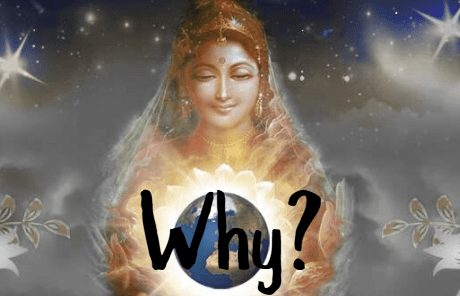
    Recently while I was coming to grips with the difficult situation facing our community, I was trying to understand things better by talking to a long-time resident. I slowly started to ask her “Why…” then paused to properly formulate my question, to which she responded “Ahh yes, the best kind of question.” And in that moment I had a profound realization of the contrast between how often I’m asking God that question and how often my understanding of the answer actually helps me.    In school I was taught that when you’re writing a factual paper, it’s important to always include the 5 W’s: Who, What, Where, When, and Why. Now, the first 4 W’s in that process are the easy ones, like putting stats on the back of a baseball card. But when you get to the 5th word, “Why,” everything suddenly seems to become a bit more complicated. Now WHY is that??

    For me, it helps to remember that we are God’s children. But not in the sense of perfectly well-mannered little cherubs silently sitting in church with folded hands; but instead more like Lord of the Flies, where we’re essentially left to our own devices and chaos often rules the day. 

    Having children myself, I often hear that wonderful “Why?” for a variety of reasons. Most days it’s asked around the topic of bedtime, as in “WHY do I have to brush my teeth?” even though they’ve brushed teeth at every bedtime since they can remember. Or almost always when the timer for screen-time goes off, I will hear “WHY do I have to turn the screen off?”

    Yet how often do people cry out in anguish that exact same question when a loved one dies, or after a big loss? Just like children, as if we didn’t know the timer of life was set, and going to run out at some point sooner than we’d like, we resist what’s happening and try to “reason” with God.

    My dear children will also ask me “why” questions that give me the immediate urge to say “Because I said so!” yet always require further explanation. “Why do I need to go to bed?” or “Why do I need to brush my teeth?” are questions that any mature adult could readily answer, yet children don’t have the foresight or maturity to understand the consequences of their own actions, and thus questions such as these are incomprehensible to them. So telling them “you’ll understand when you’re older” is entirely unsatisfying to them. 

    In the final analysis, are we really any different? Just because our questions are more complex, or seemingly unanswerable, doesn’t mean that a bit more spiritual maturity, experience, or foresight will help us understand what seems incomprehensible. Yet it’s all too easy to dwell on these questions, and to take the lack of a satisfying answer as the absence of one. 

    So recently I’ve started to act a little bit more like I would love my children to act: in perfect faith in the wisdom of their father. After all, God has already shown me enough to know that I don’t know everything, or really anything for that matter. And when I put my faith in Him, I immediately feel better about everything.    Then, looking back on all the times I had faith,  versus all the times I doubted, the pattern makes a strong case for more faith going forward, because whatever has happened has always worked out for the best, and time has solved almost all of my confusion from those experiences.    I also realized that when I want to say to my children “because I said so,” I could just as easily say “because I love you,” for the simple reason that everything I do for them, pleasant and unpleasant, comes from a place of love.    Now with new confusion over new experiences, do I really imagine things will be any different? Perhaps this time around, when the voices in my head cry out “But WHY?!” I’ll look up at my Divine Mother and Heavenly Father and, just to try something new, say “because God loves me and wants me to be free, and that’s good enough for now.”
  • The Great Pool of Consciousness

    The Great Pool of Consciousness

    I don’t remember much from my childhood, but I have a clear memory of being a young, starry-eyed boy of about 7 or 8 years old, thinking that the age of 40 was a really mature and grown-up age where adults really have everything all figured out. I know that I retained this memory because when I turned 40 myself a few months ago, the image I had in my mind of what I thought being a 40-year-old would be like made me laugh out loud. While I’d imagined having a real grasp of what life is all about, and knowing how to operate effectively in this world, a big part of me still feels like that little boy: full of curiosity and unanswerable questions about the bigger questions in life without a clue of what I’m actually doing. 

    But instead of feeling inadequate because of this, I feel gratified, because I soon realized that these adults only seemed to have everything figured out because they had become, as Yogananda calls them, “psychological antiques.” This means they had all their opinions and ideas already formed, their regrets and longings on a loop, and their childlike sense of wonder and curiosity all but left by the wayside. And while that kind of psychological certainty looked good to me when I was a child, having been on the spiritual path for a decade and a half I see things a bit differently now.

    And sitting here at this moment, thinking about what society says a 40-year-old ought to be like, I’m actually very proud of myself because of one very silly little thing I just learned how to do recently: maintain our community pool. In fact, I was sent to an all-day seminar put on by top-tier pool professionals who explained, in all the glorious scientific detail you’d expect from an all-day pool seminar, what exactly was going on between the various chemicals in my pool. And maybe it’s because I’m at the age where bird watching inexplicably becomes interesting, or maybe these guys were actually just great presenters, but I actually found the topic fascinating, like a complex real-world puzzle that I was now in charge of solving.

    After a couple weeks of handling these various chemicals and processes, I started to notice something interesting: Our spiritual lives are a lot like a chlorine pool. There are various environmental factors working to change the pool every day, and in order to maintain the optimal state of a pool it needs constant care and attention, just like our sadhana and spiritual practices. We can often get caught up in thinking our spiritual well-being is somehow a reflection of our worth, that if we’re not doing well in our spiritual practices it must be because there’s something wrong with us. But the professional pool maintainer doesn’t see the pool that way, he just sees simple problems of water chemistry that require simple adjustments and fixes.

    Yogananda said that Kriya yoga plus devotion is like “spiritual mathematics” and it cannot fail. Pool chemistry works in much the same way as mathematics, in that 1+1=2, and certain chemicals are needed to maintain optimal levels of other chemicals. For example, did you know if you just add chlorine to a pool of water it will quickly burn off from the sun? You actually need something called Cyanuric Acid in order to stabilize the chlorine and keep it from quickly dissipating. This reminds me a lot of the qualities cultivated in meditation, like inner Peace, Bliss, or Calmness. Without a bulwark like mental discrimination, or simply being careful about the environmental influences you subject yourself to, these inner qualities can very quickly be dissipated. Whereas carefully cultivating right environment can help maintain and grow these inner qualities much more effectively.

    Similarly with pH of the water, there’s an acceptable range of acidity or basicity but not necessarily one perfect level required. This is a lot like our mental state, where we can be a bit more “happy” or “sad” depending on the moment, but keeping in the range of “even-minded and cheerful” is always the goal. Letting our emotions swing too far in either direction can be problematic in different ways, just like water that is too basic or too acidic. And whereas in our pool we can add an acid or a base to maintain a proper pH level, we can add in extra practices whenever our “spiritual pH” is a bit off. When we feel too excited, doing some grounding exercises can help us interiorize and focus our energy back into the spine, and when we feel depressed or down, some affirmations, chants, or spiritual satsang can be just the thing we need to come back into balance.

    Now while a chlorine “shock” to a pool isn’t quite the same as the “liberating shock of Omnipresence” as Yogananda calls it, I could still go all day with this metaphor. However, I hope to leave you with the simple reminder that your spiritual development should be treated at times as impersonally as you would treat a chlorine pool. Just like a daily pH and chlorine check, you can do a daily Joy check, or Peace check, and see where you may need to add in a bit more sadhana, or service. Each pool is slightly different though, so make sure your introspection is filled with grace and compassion for all the karma you’ve built up to get to this point. And when we invite the Master to swim in our pool of consciousness, He helps take care of everything in even better ways than we could imagine. May His presence in your life bless you today and every day.

  • “Don’t Worry, Be Happy”

    “Don’t Worry, Be Happy”

    “In every life we have some trouble, but when you worry you make it double, so don’t worry… be happy!” (Bonus points if you heard the tune in your head)

    There’s a good chance that every red-blooded American over the age of 20 has had this song stuck in their head at least once or twice in their lifetime, and as I was finding myself with this timeless tune echoing in my own brain cells the other day I was reflecting on the deeper spiritual meaning behind this song. The repeated phrase of “don’t worry, be happy” might seem to many people to be a silly proposition, when in reality it’s a wonderful reminder to the yogi of our own inner power to choose our state of consciousness. Whether you think it’s silly or instructive depends entirely on your awareness of the underlying realities at play.

    I was also reflecting on the dichotomy between the ease of grasping certain mental concepts, like “don’t worry,” and the difficulty of maintaining that state of consciousness in the face of the habit-driven monkey mind. As a concept, “when you worry you make it double” makes perfect sense. If I already have troubles, they’re not changing or getting better just because I worry. But at the same time, often the reason these “troubles” are so troublesome is because of what they portend to happen in the future. How could I think about the trouble of losing my job without the obvious implication that I will soon run out of money? I may not be out of money now, but I can’t stop myself from worrying what will happen when that occurs.

    Then I realized what this all really is: an opportunity.  Paramhansa Yogananda stated very clearly that every obstacle we encounter in our lives is an opportunity; and that we are on this planet to be educated and entertained. But it’s hard to be entertained by worrisome things, and it’s equally hard to be educated when you’re only looking at each situation in one way. The worldly mind loves to think of worst-case scenarios, and analyze things from a contractive point of view, so the opportunity here is to replace old ways of thinking with new, expansive attitudes towards life.

    So what to do with this opportunity of a worrisome life event? Practice. This, I realized, is the key to the whole lockbox of worries: practice. We are not here on this planet to develop the things we’re already good at–those are gifts to be shared with the world. No, the thing we’re here to do is develop and grow. So where do we start?

    Awareness. If the only thing we do is become more and more aware, we will reach our ultimate spiritual goal of Self-realization. How do we let go of things that hold us back? By becoming aware that they exist, and that we can let them go. How do we change our perspective? By becoming aware of the possibility of new perspectives. And so on…

    As yogis, we know the ways to practice this already: meditation, introspection, and contemplation. But the reason these “opportunities” still exist in your life, even after years or decades of practice in these areas, is because there’s more to unravel in the karmic weave of our lives, and more unlearned lessons that God and the Masters are helping us to learn.

    Finally, there are also “partially-learned” lessons that we can continue to work with for our entire lives at varying levels, like trusting in the divine plan for our lives. We must already have a certain level of trust to be on a spiritual path so deliberately in the first place, but when we find ourselves worrying about life or world events it becomes clear where the line of that trust ends and our ego’s desire to control things begins. But as the awareness of that line grows, and as we move closer to God by giving Him our worries and fears, we look back and see that the process works. The practice works.

    The only thing we need to do is keep practicing. So as you inevitably find yourself worrying about the future, or the outcome of certain events, remember not to judge yourself for your ego’s benevolent desire to protect you. Your mind, while at times untamed and wild, has been a great tool to get you to the point you’re at. Now the only thing you need to do is keep following the Great Ones, their words and practices, and continue to grow your awareness of Truth. With a higher perspective comes greater peace. With new knowledge comes new possibilities. And with increasing awareness comes the remembrance of what we are in Truth: beloved children of God who can never be lost to His sight. Blessings to you on this sacred journey that we walk together.

  • You’re Not Here for That…

    You’re Not Here for That…

    I’ll admit that there are times when I wish I could just speak to God directly, like having a little device in my ear where I could get a clear message, in plain English, any time I want. Maybe when I’m faced with a tough decision I could just ask God “Hey, should I go with the fries or salad with my sandwich?” And he’d say something profoundly helpful like “The fries will taste better now, but your body will feel better after the salad.” But, as most of you spiritual seekers know, messages from Spirit are rarely so straightforward.

    When I look around at the world with so much uncertainty and chaos, I frequently get the feeling that something (outward) should be done about “this,” whatever it is, and that maybe I can help. But then my amazing wife said something that struck me so profoundly I thought Master had to be speaking through her:

    She said “You’re not here for that, you’re here for the fallout from it.” And since I’ve been sitting with those words echoing in my head, it’s brought me a tremendous amount of peace. I don’t need to fix all of the many overarching problems of the world now, which is a relief because I’m not in a position to fix any of them… But when hard times come I will go forth and do more of the work I came to Earth to do. And I strongly believe this is what the Ananda communities are on the planet for: to offer spiritual succor and divine clarity to confused and hurting souls, as the world they put their faith in inevitably disappoints them.

    In my previous blog entitled “Who Did God Vote For?” I discussed Yogananda’s statement from the Autobiography of a Yogi that Babaji and Christ have planned the spiritual salvation of our age, and are working tirelessly to help in the upliftment of consciousness on the planet. I also discussed how, with all the bad news of the world, it can be easy to get caught up in wanting to change the world itself for the better and lose track of the point of this life.

    And it’s more important now than ever to remember some of Yogananda’s teachings, like “take care of the minutes, and incarnations will take care of themselves” and “environment is stronger than willpower.” If we are so focused on what happened in the past, or worried about what will happen in the future, it’s pretty hard to take care of the minutes. And if we’re surrounding our mind with thoughts of what’s wrong with our society or government, then that mental environment will make it nearly impossible to go deep in the inner silence.

    So I think about a question that Asha asked of Swamiji many years ago, which is basically the universal question of “In a moment of crisis, how will I know what God wants me to do?” to which he answered “Practice when it’s easy.” In other words, don’t wait for things to get really bad to find inner strength, bravery, or calmness, start cultivating those things now using any chance you get.

    And it is hard to think about the world today as “the easy part,” but when we look at history, and what exactly we’re repeating right now, we know it can get a whole lot worse, and likely will. But it’s important to remember, as a devotee, unless you’re already highly placed in such a way as to directly affect the current trajectory of the planet, then the MOST important thing to do is look within and work to uplift and purify your own consciousness.

    We don’t know what tests lie ahead of us, or for our country, or the world. That much is certain. But if the chaos, uncertainty, and fear inspire us to do anything, let it be to go inward, to pray more, serve more, and especially to love more. Take inventory of your life right at this moment, and look for ways you can increase the Light, the Love, and the Joy of God, wherever you are.

    In this way, you will be building up spiritual Power in order, as Master encourages us, to “stand unshaken amidst the crash of breaking worlds.” And until the worlds are actually crashing around us, let us use our time and energy to practice, and grow, and find Peace where we can. Because whatever happens from here, soon enough we’ll all meet up again in the astral world, with Master and Swamiji there to greet us, and we can say for certain “It was a good show.”

  • Who Did God Vote For?

    Who Did God Vote For?

    Author’s Note: Any opinion expressed in this article is solely and entirely the opinion of the author, and in no way whatsoever reflects any opinion on the part of Ananda.

    It’s one thing to find a true spiritual teacher who explains the nature of life to you, it’s quite another to be able to hold onto those beliefs in the face of overwhelming societal opposition. After 15 years on the spiritual path with the teachings of my guru Paramhansa Yogananda, but almost 40 years growing up in this society, I’m still discovering new ways that this is true.

    I often think of the story of Narada, a wise sage who, proud of his wisdom, once asked Lord Krishna “How is it that human beings are so easily caught up in delusion?” to which the Lord replied “That is a big question Narada. Before I answer, would you get me a cool glass of water?” So Narada dutifully goes in search of the water. He comes to the house of a young maiden, who he immediately falls in love with. He asks her to marry him, they grow up and have a whole life together, kids, grandkids and all, until one day a terrible flood comes to the village and washes away everything: his home, his family, and everyone he loves. Narada narrowly survives, and in his anguish he cries out “Krishna!” and immediately the Lord appears to him and says “Narada, what are you doing? I sent you for a glass of water an hour ago, and here you are sleeping!”

    This classic Hindu tale is a beautiful illustration of how easily even the most advanced disciples can get caught up in the delusion of maya, and this story was given to us to help us remember that no matter how much we gain, or grow, or realize on the spiritual path, maya or delusion is not to be trifled with.

    Even though Yogananda told us in the Autobiography of a Yogi that Jesus and Babaji have planned the spiritual salvation of this age, it seems that every four years I still succumb to fear and worry about the fate of our country due to who will be leading it. And because, like many others, this worry is mostly rooted in compassion for all beings rather than a mere personal preference, I can justify my worry instead of realizing it as a lack of trust.

    But a strange thing happened to me in a conversation with an internet stranger, and it humbled me the same way that the power of maya humbled Narada. This man was saying that he voted for one candidate, but that he didn’t actually like the idea of him becoming president. So I asked him, why did he vote for him then? And he said, I asked God who I should vote for, and that’s what he said to do. And then it hit me… I hadn’t even thought to ask God who He would vote for, I was only thinking of which candidate I thought was best.

    In the Festival of Light every week, we hear the words “In God, all are equal. Not only Jesus Christ, Lord Krishna, and great saints everywhere, but even in essence those on earth who have sinned most greatly.” Equal, in this case, also means equally loved. Yet how often we are quick to judge the actions of others, and forget that God equally loves his naughty children as much as his good children, and that karma is a perfect system that needs neither our judgement nor our reactivity.

    Since that conversation with the internet stranger, I’ve been thinking a lot about the idea of “Who did God vote for?” and the answer always comes: Whoever won. In other words, in every situation, whatever is happening is exactly what God wanted to happen. Nayaswami Asha often tells the story of hearing a divine voice in her head once that asked “Do you think any of this is happening outside the will of God?” And to that question, no matter how difficult, I’ve never been able to answer “yes,” about anything. Even when I don’t like what is happening, or I can’t see how it could possibly be a good thing, I still find comfort in the fact that I’ve asked Master to take charge of my life, and this is what He and Divine Mother have given me to work with, so it must be what’s best for my spiritual salvation.


    It also helps to remember that we are in a new age of energy, and with that new age comes new forms of society. And for new forms to rise, the old forms have to fall. Destruction and upheaval are rarely fun for those involved, but we would do well to remember that this is exactly what Jesus and Babaji have planned for the upliftment of the consciousness of the entire planet. And that we chose this time to incarnate, not because of the ease and pleasure we would have for this incarnation, but for the spiritual gain we would achieve through these experiences.

    So in closing I’ll share with you the practice that has helped me most when fear and worry take over my thoughts: I remind myself that I am a beloved child of God, that Master told me not to worry, and I do my best to completely accept the moment exactly as it is. Then, in thinking of how to go forward, I ask myself “How can I love more?” and “How can I serve more?” and whatever happens from there seems to always work out for the best. I pray that we as spiritual seekers can all do the same, for then God has ever-more hands and hearts to bring His light into this world.

  • Heavenly Fatherhood

    Heavenly Fatherhood

    The clock said 1:41 am, but it might as well have shown alien symbols for all my sleep-deprived brain could comprehend. In fact, I could hardly remember any details about my life outside of that hospital room other than the unforgettable fact that a baby was coming, and we had no choice but to keep going.The mental picture I had of how this delivery would go was long-ago destroyed in a flurry of doctors recommendations and unexpected happenings, with each element of our carefully thought-out birthing plan falling like dominoes one after another, hour after hour.

    But even at the lowest point of this entire process, when our reality seemed only to consist of pain, torment, and deep rhythmic breathing, we never lost faith that God was guiding us, and that this baby would be delivered healthy.  And 50-something hours after we got to the hospital, on the evening of Krishna’s birthday, our own baby Krishna was born and our lives, and relationship to God, would never be the same.

    Most parents will tell you that there is no more life-changing moment than having a child, and I would have to agree. But I had no idea that one of the ways my life would change would be my relationship with God and Guru. So why do I share this story? Because I’ve learned that the more we can live in the right relationship to our Divine Mother, the more calmness and confidence we can bring to every situation, and after 9 years of parenting as a disciple of a great Master, I’ve learned a few things I can share.

    By this time in my life of having children I had been living and participating in Ananda Palo Alto for maybe four or five years, so I had at least the foundations of a spiritual life and a relationship with God and Guru. I prayed fervently to my “Heavenly Father, and Divine Mother,” and I thought that I understood these concepts, but only from the experience of being a child. On the other side of the coin, through the experience of parenthood, I came to the realization that we are indeed God’s beloved children, and that God treats us just like we treat our children when we are at our most loving.

    The first time I realized this was in the post-birth baby bliss that all new parents experience after bringing home their first little bundle of Joy. The feeling of love was so strong I thought that my heart might explode out of my chest, and in that moment it dawned on me: How could I ever think to understand how much God loves us when my limited human heart is already filled to capacity over just one tiny person?

    Before this I could never fathom what it would feel like to look over and see a living, breathing piece of my heart just lying there, but upon gazing at my newborn son I immediately understood what that French saint meant when he said “If you knew how much God loved you, you would die for Joy,” and what Yogananda meant when he said to his disciple “How can a little cup hold the whole ocean?” And I can look back on those moments and realize that God is always looking at us with pure Love, and trust that He too only wants the best for us.

    Then as my son grew up, as children tend to do, he became curious about the world around him. As a loving parent who wants him to grow up happily, I wanted to let him explore his world without limits, but when he came upon dangerous things like the stove, or our altar candle, there were moments that I had to step in. And even though I wanted to give him everything he asked for, I also had to deny him things like too much candy, or too much TV for his own well-being. 

    From those experiences I realized that often when God is denying us what we want in any given situation, often He is protecting us from pain, or worse. And just like my children did, sometimes I would throw a fit because God must not understand how much I want this, and how happy I think it would make me. And just like I did, God held firm that He loved me too much to let me fulfill those harmful desires.

    When we are open to God’s guidance, we must also trust that, like a loving parent, He has our long-term best interests in mind. But instead of being denied toys and candy, we are denied things like certain jobs or certain relationships. At the time, it may feel like a tragedy, but for me personally when I look back on my life I am so grateful for all the times I was denied what I thought I wanted because I now see, from a closer connection to Spirit, that those things would have taken me away from that connection, and toward more material desires.

    So when life gets tough, as life tends to get on this planet, just remember that your Heavenly Father and Divine Mother love you more than you could comprehend, and are doing all that they can to help you turn back toward their loving embrace. Then, the only thing we need to do in the midst of our trials is be open to that Love, and know that we are being guided back home with every step we take in that direction.