Category: Meditation

  • Eyes on the Prize

    Eyes on the Prize

    We live in a world that celebrates multi-tasking. Getting hired for any management position seems to make this a priority skill. The presumption is that it facilitates productivity.


    As any parent or teacher of small children knows very well, situations often arise that interrupt one’s focus. But is multi-tasking an optimal design for attentive living, for managing stress, for achieving success? Consider the creativity, inspirational impact and enormous body of work of Swami Kriyananda – his music, books, lectures, whole communities – all brought to life with total focus, one undertaking at a time.  

    Can you multi-task while meditating? It curses the intended effect. Concentration and stillness flee the scene.


    An axiom often repeated by Paramhansa Yogananda is another key to success: “The greater the will, the greater the flow of energy; and the greater the flow of energy, the greater the magnetism.” Whatever you want, you have to act with commitment, confidence and courage. The weaker the will, the weaker… You get it.


    Another secret of success is self-study. What is it that you want? If you have failed to achieve it, why? Yogananda would constantly remind his disciples, “The season of failure is the best time for sowing seeds of success.” Get back on that horse, but with a clear understanding of what will keep you from being thrown again. Too often we approach a challenge with the same mindset that didn’t work the first time or the second or…. Stop! It’s time to rethink what you thought.


    With humor and truth, probably from an old Reader’s Digest, a one-liner claimed that when you want to get somewhere, you have to know three things: where you came from, where you are going, and where you left your keys. 


    Ultimately, of course, the vehicle is oneself, the destination is Self-realization, and the keys are the principles that comprise a dharmic life. But in our multi-task society, even with the best intention, help is needed to keep us from driving in materialistic circles, unable to locate the exit ramp. I, like many, once believed that I could find it on my own. I wasn’t ready for the true Guru to appear.


    Worldly goals need not be at the expense of spiritual gain. They can, indeed, serve a higher purpose than personal ambition and self-indulgence, thereby serving also to invite the Guru’s appearance. The question then is who is given the lead, you or the Guru? “Open your heart to me,” the Guru says, “and I will enter and take charge of your life.” Are you ready for that too? How quickly do you want to reach where the Guru wants to take you? How willing is your will to let go of what’s in the way?
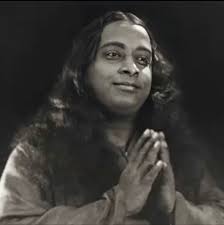
     

    The Guru is an emissary of God. It is God’s guidance that is offered, along with God’s infinite abundance. Success in this world, no matter how great, vanishes the moment we die. The multi-tasker is instantly redirected to a whole new dimension of focus where that skill is of no use. Better to seek the true success of achieving our soul’s freedom. Eyes on the prize.
  • The Great Pool of Consciousness

    The Great Pool of Consciousness

    I don’t remember much from my childhood, but I have a clear memory of being a young, starry-eyed boy of about 7 or 8 years old, thinking that the age of 40 was a really mature and grown-up age where adults really have everything all figured out. I know that I retained this memory because when I turned 40 myself a few months ago, the image I had in my mind of what I thought being a 40-year-old would be like made me laugh out loud. While I’d imagined having a real grasp of what life is all about, and knowing how to operate effectively in this world, a big part of me still feels like that little boy: full of curiosity and unanswerable questions about the bigger questions in life without a clue of what I’m actually doing. 

    But instead of feeling inadequate because of this, I feel gratified, because I soon realized that these adults only seemed to have everything figured out because they had become, as Yogananda calls them, “psychological antiques.” This means they had all their opinions and ideas already formed, their regrets and longings on a loop, and their childlike sense of wonder and curiosity all but left by the wayside. And while that kind of psychological certainty looked good to me when I was a child, having been on the spiritual path for a decade and a half I see things a bit differently now.

    And sitting here at this moment, thinking about what society says a 40-year-old ought to be like, I’m actually very proud of myself because of one very silly little thing I just learned how to do recently: maintain our community pool. In fact, I was sent to an all-day seminar put on by top-tier pool professionals who explained, in all the glorious scientific detail you’d expect from an all-day pool seminar, what exactly was going on between the various chemicals in my pool. And maybe it’s because I’m at the age where bird watching inexplicably becomes interesting, or maybe these guys were actually just great presenters, but I actually found the topic fascinating, like a complex real-world puzzle that I was now in charge of solving.

    After a couple weeks of handling these various chemicals and processes, I started to notice something interesting: Our spiritual lives are a lot like a chlorine pool. There are various environmental factors working to change the pool every day, and in order to maintain the optimal state of a pool it needs constant care and attention, just like our sadhana and spiritual practices. We can often get caught up in thinking our spiritual well-being is somehow a reflection of our worth, that if we’re not doing well in our spiritual practices it must be because there’s something wrong with us. But the professional pool maintainer doesn’t see the pool that way, he just sees simple problems of water chemistry that require simple adjustments and fixes.

    Yogananda said that Kriya yoga plus devotion is like “spiritual mathematics” and it cannot fail. Pool chemistry works in much the same way as mathematics, in that 1+1=2, and certain chemicals are needed to maintain optimal levels of other chemicals. For example, did you know if you just add chlorine to a pool of water it will quickly burn off from the sun? You actually need something called Cyanuric Acid in order to stabilize the chlorine and keep it from quickly dissipating. This reminds me a lot of the qualities cultivated in meditation, like inner Peace, Bliss, or Calmness. Without a bulwark like mental discrimination, or simply being careful about the environmental influences you subject yourself to, these inner qualities can very quickly be dissipated. Whereas carefully cultivating right environment can help maintain and grow these inner qualities much more effectively.

    Similarly with pH of the water, there’s an acceptable range of acidity or basicity but not necessarily one perfect level required. This is a lot like our mental state, where we can be a bit more “happy” or “sad” depending on the moment, but keeping in the range of “even-minded and cheerful” is always the goal. Letting our emotions swing too far in either direction can be problematic in different ways, just like water that is too basic or too acidic. And whereas in our pool we can add an acid or a base to maintain a proper pH level, we can add in extra practices whenever our “spiritual pH” is a bit off. When we feel too excited, doing some grounding exercises can help us interiorize and focus our energy back into the spine, and when we feel depressed or down, some affirmations, chants, or spiritual satsang can be just the thing we need to come back into balance.

    Now while a chlorine “shock” to a pool isn’t quite the same as the “liberating shock of Omnipresence” as Yogananda calls it, I could still go all day with this metaphor. However, I hope to leave you with the simple reminder that your spiritual development should be treated at times as impersonally as you would treat a chlorine pool. Just like a daily pH and chlorine check, you can do a daily Joy check, or Peace check, and see where you may need to add in a bit more sadhana, or service. Each pool is slightly different though, so make sure your introspection is filled with grace and compassion for all the karma you’ve built up to get to this point. And when we invite the Master to swim in our pool of consciousness, He helps take care of everything in even better ways than we could imagine. May His presence in your life bless you today and every day.

  • Hope For A Better World: Spiritual Community

    Hope For A Better World: Spiritual Community

    When:

    Friday, April 11th | 7:00pm: Free

    Where:

    New Renaissance Bookstore
    1338 NW 23rd Ave. Portland, OR 97210


    Join us at New Renaissance Bookshop for an evening of music, inspiration, and deep spiritual wisdom as we welcome Jyotish & Devi, the spiritual leaders of Ananda, for a special gathering. This free event offers a chance to explore how spiritual community can uplift our world, bringing hope, connection, and divine light into our lives.

    Inspiring Talks
    🎶 Uplifting Music
    Q&A with Jyotish & Devi

  • The Inner Door

    The Inner Door

    It’s now Christmas time: the greatest, most holy time of year. We celebrate with so many traditions all over the world, including many other holy days and observances unrelated to the birth of Jesus Christ. But it is universally recognized as the sacred season where even the astronomical and astrological phenomenon align with an increase of light in the darkest of times. Every tradition, culture and expression in some way relates to the deeper meaning of Christmas time: not only the birth of the universal, divine Christ consciousness, but the awakening of that same divine light in everyone and everything. One of the most extraordinary special traditions is Paramhansa Yogananda’s 8-hour Christmas meditation, practiced at Ananda Portland and by devotees all over the world, meditating deeply to awaken in Christ’s light.

    This world is both matter and Spirit, and the awakening Christ in all every thing, and each individual, is the scintillating super highway to become a Christ oneself and realize that divine consciousness everywhere. Swami Kriyananda wrote a beautiful song in which each line beautifully describes this path of awakening in Christ’s light:

    When human hopes toward Thee aspire, dark woods of grief are set afire. When someone, anyone, consciously aspires towards higher consciousness and God, that same lamp of devotion ignites the fire that eventually transmutes all human grief, sorrow and suffering. Yogananda said: “Remember that finding God will mean the funeral of all sorrows.” The conflagration of these very real and difficult human experiences goes up in self offering, the rising smoke of blissful freedom in its release. 

    Beyond all reach of earthly skill, Thy love alone our hearts can fill. Nothing in this human experience can fill our hearts: relationships, money, travel, lavish gifts…this world is an unfortunate combination of endless pleasures (and pains) which will never, ever fill the void in our hearts. We may imagine or construct a series of false joys, but in the end we will always be insecure, lonely, fearful or otherwise incomplete without God. Fortunately it is a two way street: when we finally seek God earnestly with devotion, our hearts gradually and spontaneously become full with God-happiness and peace. In the prayerful words of St. Augustine “Thou hast formed us for Thyself, and our hearts are restless till they find rest in Thee.”

    Christ’s light that shone on earth from heaven opened for us the inner door. The guru or avatar, most famously represented beautifully as Christ, opens the inner door for us to enter the realms of divine consciousness. We cannot get there without kriya yoga: the practice of transmuting our inner energies by pranayam and Guru’s grace. Yogananda describes the path through the inner door as “deeper, longer, Guru-given meditation”, where at least comes the “celestial Samadhi”, final union with God through Christ.

    To all who love the gift is given: joy and freedom evermore! Love is only a humble word which hints at the divine, cosmic power underlying and overarching everything in this universe and far beyond. Love is synonymous with God, and is the final answer and only solution to everything in this world. Sri Yukteswar said that “Divine love is without condition, without boundary, without change. The flux of the human heart is gone forever at the transfixing touch of pure love.” This is the love of God and Guru, the real and only summum bonum of this world, through which our own steadfast seeking, meditation and loving, will give us the ultimate gift of joy and freedom, evermore.

  • Do Trousers Matter?

    Do Trousers Matter?

    Last week on Rise in Freedom, Gita reflected on the covid pandemic and how to find our way through uncertain times. Continuing that theme, the pandemic and times like it may well have be times when, like the brilliant writer PG Wodehouse’s character Bertie Wooster once inquired:

    “There are moments, Jeeves, when one asks oneself, ‘Do trousers matter?’” to which his faithful valet Jeeves’ stoically replied: “The mood will pass, sir.” 

    Beyond the philosophical question of trousers in moments of dejection and difficulty, the world today is a hotbed of rapid change and uncertainty, making the quest for peace a spiritual obligation. But raising our consciousness isn’t just a personal endeavor; it is a collective necessity that can transform society from the ground up.

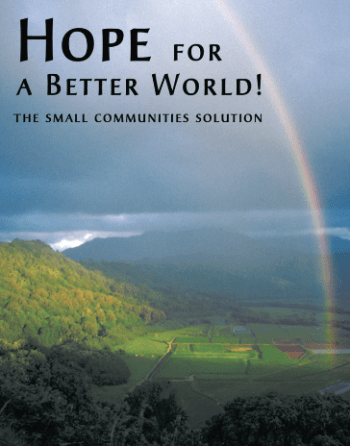
    In his book Hope for a Better World, Swami Kriyananda emphasized that the solution to humanity’s challenges is not in changing systems but elevating consciousness: “What will raise humanity…is a higher consciousness – something that groups, particularly, can demonstrate.” This collective shift in consciousness can be much more effective and inspiring than isolated individual efforts. The monasteries of the Dark Ages are a classical example where collective spiritual practices helped to preserve and elevate civilization in times of global turmoil.

    Swamiji also describes the disintegration of old, form-bound consciousness and the emergence of a more flowing, intuitive consciousness. He writes: “We are at a time of a greater awakening of the spirit, not just sort of an intuitive flow in our work and in our dealings and so on, but a greater awareness of who we really are.” This shift involves recognizing that energy is the fundamental force behind our actions and thoughts. By becoming more aware of this energy and working with it consciously, we can better navigate the complexities and difficulties of life.

    In times of global instability and change, the greatest reforms will come from small groups made up of dedicated individuals rather than through systemic or political efforts. Ananda is one such group, made up of countless individuals dedicated to sincere practice of yoga, meditation, service and devotion to uplift consciousness. While there are many such groups creating positive change, the majority of humankind only spins the wheels of the world’s problems in place. Again on this subject Swamiji writes: “Human problems have their roots deep in human nature. Their only possible solution lies quite outside the political arena – in a broad shift of consciousness.” And rather than the simple fact of the noble Jeeves’ truth that “the mood will pass”, there lies a far greater opportunity at the heart of it.

    Interestingly, the most dark and difficult times of change can serve as the catalyst for the greatest spiritual awakening and growth. Many saints and mystics have foretold of great suffering, cataclysm and economic disaster. But these objectively negative experiences hold a secret key of transformation for all those who can leverage it. Everyone who is alive during a given period of global challenge shares a common karma, one which earnest spiritual seekers consciously choose to live and grow through.

    Not only can we weather any storms that come, we can each put our trousers on to create tremendous positive change–raising our individual and collective consciousness. The effects will ripple out and bring greater peace and harmony throughout the world, and serve as a beacon of hope in challenging times.

  • The Fearless Heart

    The Fearless Heart

    We recently celebrated a massive, beautiful week of Spiritual Renewal at Ananda Village with over 300 in attendance live, and at least that many tuning in online. The theme of the week resonated deeply with every heart: “The Battle of Life and How to Fight It”. Now is the time to keep our spiritual inspiration high, and to fight life’s battle with strength of heart.


    Looking forward to another inspirational community event closer to home, Ananda Portland will host Asha Nayaswami for a weekend of special events August 23-25. A special highlight will be Saturday, August 24th when Asha shares an inspiring morning workshop entitled Self-realization: The Fearless Heart, and joins us in celebrating the magical evening of Guru Night at our Ananda community together.

    The term “Fearless Heart” is an interesting concept and spiritual quality to contemplate. At some point on the spiritual journey, it becomes necessary to live from the heart increasingly not only by sweetness and love, but courage and fearlessness. The battle of life cannot be fought only with love–or if it can be, then sometimes that love must be fierce and fearsome, like the Hindu goddesses Durga or Kali.

    What does a fearless heart look like? A devotee or spiritual seeker has to be willing to walk the talk, to live and embody the spiritual teachings, even and especially when faced with opposition, challenge and hardship. It takes a developed and sensitive intuition, or calm feeling, to know how to act. Whether fighting the good fight with courage, or taking the path of acceptance and peace, the heart of a spiritual warrior can remain calm and centered like the deep waters of the ocean, whether below a surface of glassy stillness or raging waves.

    The practices of Kriya Yoga and all manner of yoga, meditation and other techniques are instrumental in developing this calm, clear center. But like the soldier who trains for battle, no preparation or simulation can ultimately compare to the actual chaos flying arrows, crashing swords, and deadly din of real battle. So too the yogi prepares diligently, whilst knowing that the most important preparation comes from a creative, unwritten whisper of the heart. That sensitive soul guidance will lead unerringly to smaller victories of right attitude and action, and the one true, everlasting victory of spiritual enlightenment. 

    Paramhansa Yogananda advised: “meet everybody and every circumstance on the battlefield of life with the courage of a hero and the smile of a conqueror.” This is the way of the fearless heart: armed with a brilliant smile of divine love and joy, plunging courageously into the battle of life wherever it leads.

    There is a war constantly waging in this world, and inside every conscious being. The numerous battles taking place are fought on the everyday field of our relationships and habits, thoughts and actions, and in the quiet stillness of yoga-meditation.

    It would be easier to avoid the many conflicts that beset us and the sufferings of life, but an easy life will not bring victory. Conflicts and sufferings are unavoidable, and only by prevailing with a brave heart will we continue to build the strength to win the battle. Then we can help others develop their own fearless hearts, and together win the final fruits of victory: freedom and joy forever. 


  • Supreme Devotion

    Supreme Devotion

    Love is the cosmic glue which holds this universe together with its interplay of countless swirling celestial bodies, and multitudes of hearts and minds. Paramhansa Yogananda’s own guru Swami Sri Yukteswar Giri was a stern yoga master who yet knew this wisdom of love. He wrote that “The first and most essential thing on the spiritual path is to uncover the natural love of the heart; without that one cannot take one step on the spiritual path.” 

    What really is the “natural love of the heart”, and how can we cultivate it? This is at the very core of every human experience and the all-pervading reality of this world: seeking universal love. Paramhansa Yogananda identified the simple premise that all beings are striving only to attain happiness, and to avoid suffering and pain. Love then, is the uniting force that brings happiness, and the soothing balm that heals all pain. It is the answer to every question, the key to unlock every door, and the secret ingredient in every recipe of life.

    Here are some all-important ways to cultivate divine love:

    1. Love God.  These two words comprise the summa totalis of all spiritual teaching. Loving God may be a challenge, an mystery, or a trigger for many people who do not understand, struggle with, or reject the very concept of God. And yet if we think of God as the highest potential within our own self, and the unifying consciousness of Spirit pervading and beyond all creation, there is an undeniable, beautiful truth to behold there. Even though we cannot comprehend God with the mind, by choosing to love God with the heart, we expedite our “understanding” and gradually, our oneness with God’s infinite love. We can love God more by directing our devotion to the Christ center at the point between the eyebrows especially in meditation, and by singing and devotional chanting to God.
    1. Love others as expressions of God. This is the natural expansion of love as our hearts enlarge the capacity for love. These two concepts comprise the greatest teaching of Jesus Christ to “Love the Lord thy God with all thy heart” and “love thy neighbor as thyself” which is feel our oneness with all in the love of God. 
    1. Pray for devotion. It is a strange and mystical truth that only by offering our little love, can we receive the great love of God. Prayer can open our hearts to receive the very love that we long for. Swami Kriyananda said, “Devotion is a gift of God and by your very act of prayer you are putting out the magnetism to draw that gift to you. Pray this simple prayer as often as you remember: ‘Divine Mother, awaken your love in me, and then help me to awaken that love in all.’”
    1. Tune into the Masters. The great masters of yoga and saints of all religions are those who have perfected love. Everything flows through channels in this world, and the perfect love of God is no exception. Focus on the perfect love of God expressed through these awakened masters in meditation, prayer and activity, and increasingly that divine love will fill your own heart and mind.

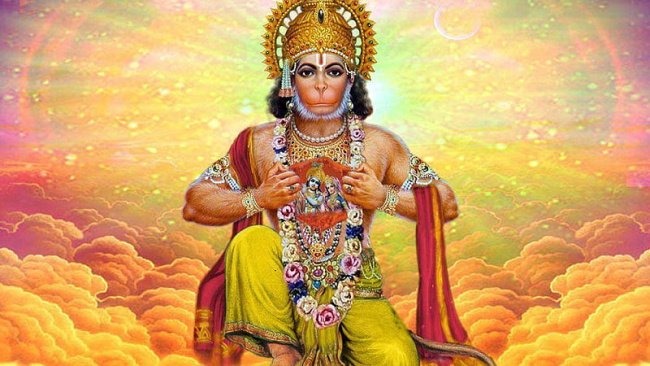
    Of all the sacred lore of yoga scripture of ancient India, one of the most beautiful scenes depicts the monkey god Hanuman, the most devoted follower of Lord Rama, revealing the secret of his legendary strength and endurance. It is said that even sparring against his lord the great Rama himself, that Hanuman could not be bested. When asked why, Hanuman opened his chest to reveal both Rama and Sita, the perfected masculine and feminine principles of Spirit, residing in his heart. Victory and success in everything comes when the love of God becomes the only focus of the heart.

    The ancient yoga master Patanjali identifies this principle in his famous Ashtanga Yoga, in one of the five Niyamas or observances, as Īśvarapraṇidhāna— supreme devotion, total surrender and commitment to the Lord. Once established in this divine self offering, the infinite Love of the God brings final yoga, or union with Spirit. 

  • Community of Souls

    Community of Souls

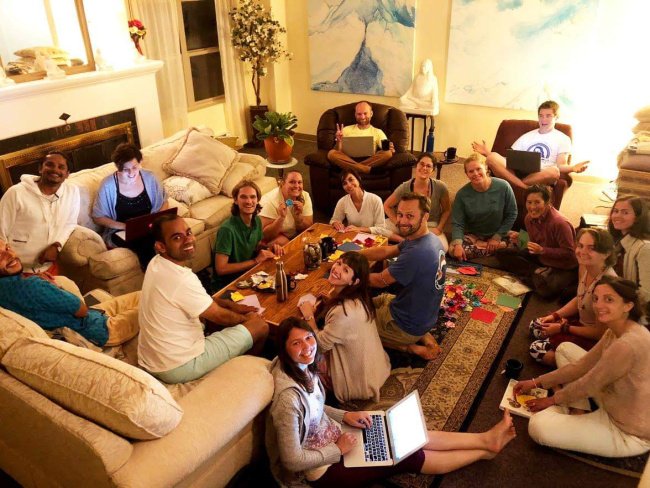
    There is a place on this earth where friends come together, live side by side, and support each other in their individual search for God. Not a cloistered monastery or ashram only for those who renounce the world, a place for everyone. In fact, there are several such places. I have the great good fortune of being born into one such place – Ananda Village, the first of now eight Ananda communities around the world.

    It all started on a dark and snowy night, just five years after the whole place had burned to the ground. In fact, because of the fire that tore through Ananda Village in 1976, I was actually born in a make-shift ashram in the nearby town of Nevada City, California. It took another five months for my parents to secure one of the newly built dwellings in Ananda Village proper and move our little family of four into the community. 

    My early memories are filled with more joy, magic, and adventure than I could possibly share in a single article. Suffice it to say, being raised in a community founded on the principles of Self-realization and filled with the kindness of people seeking a personal relationship with the Divine is a gift that keeps on giving.

    Paramhansa Yogananda, whose teachings the Ananda communities are founded, once said, “Environment is stronger than will.” It is a strong statement, and one that has proven true for me again and again. When I set myself in an environment that supports the life I desire, it manifests with greater ease. That’s why I workout better in a gym, sing more beautifully in a temple, study better at the library, and meditate deeper in a sacred place. 

    This was such a challenge during the pandemic, right? For years, we had to set our homes up as a supportive environment for work, school, rest, and play.

    Today, I live in the Ananda Community in Portland Oregon with my family. This is one of the most beautiful places I’ve had the joy to reside. When you enter from the quiet street, you are greeted by the lush landscapes leading up to home-like apartments, each unique yet harmonious. Smiling faces are often seen, as residents of the fifty units come and go in their daily activities. Many of us eat together on Sundays in the Living Joy Center, many meditate together in our little chapel. We host kirtans on the lawn in summer time and annual work days where we spruce up the community together. And while life continues to do its usual ups and downs, we all know that we are surrounded by a community of souls who care for our highest good. 

    Living in community supports my life in more ways than I can count, but today, I thought to share my top five:

    1. Peaceful vibrations: as soon as I enter the property I can feel the shift. A soft peace and a sweet joy are permeating my surroundings. 
    2. Deeper meditations: when I am here, whether in my home or in the chapel, my meditations are deeper. I believe it is a result of 30+ years of meditators who have come before and uplifted the environment here. 
    3. Spiritual friendships: whether on this path or another, those who live here are all seekers. Friendships here are rooted in this shared search for the Divine and it makes for lifelong bonds.
    4. Joyful service: there is nothing more fun or bonding than cooking a meal together for twenty, or pruning fruit trees together, or painting signs. My family loves workdays so much, we treat them like a national holiday! We toss on our overalls, pull out our gloves and tools, and are nearly always early to the coffee and muffin gathering and prayerful opening circle. 
    5. The long haul: for me, life is about Self-realization, the slow and steady journey toward my truest and highest self. To live among others with a similar purpose helps me remember this when I have become distracted, and be inspired when I need a lift. It’s like my favorite African proverb, “If you want to go fast, go alone. If you want to go far, go together.”  
  • The Custodians of Religion

    The Custodians of Religion

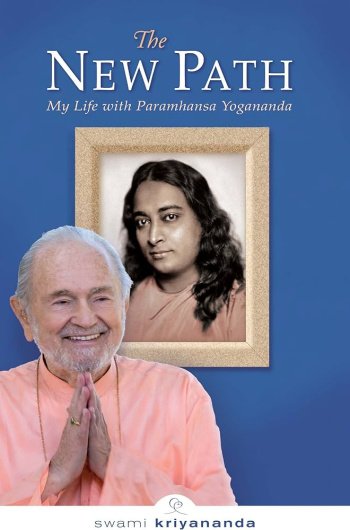
    In my early life lexicon, the term “custodian” referred only to the janitor at my elementary school. Later, in my early adult life, I read perhaps one of the greatest spiritual books ever written, The New Path by Swami Kriyananda. In Part II, Chapter 33: Original Christianity,  the author emphasizes and expounds an important message from Paramhansa Yogananda:

    “The saints alone are the true custodians of religion. For they draw their understanding from the direct experience of truth and of God, and not from superficial reasoning or book learning. The true saints of one religion bow to the divinity manifested everywhere, including of course to the true saints of other religions.”

    I know that I met at least one great saint in Swami Kriyananda himself. He demonstrated in countless ways, large and small, that his consciousness was elevated far beyond the average human state. He drew little attention to this however, as saints often do, and even obscured it at times. The famous French saint Joan of Arc said “If I am not, may God put me there; and if I am, may God so keep me.” Furthermore Swamiji and the saints encourage all of us, as fellow spiritual seekers, to consciously acknowledge, identify with, and develop the saintliness in ourselves and in one another. I remember one occasion Swami referred to all of us as “Saintlets”, or little saints. This has been a helpful practice to me spiritually–to look for and encourage the very best in myself and those around me.

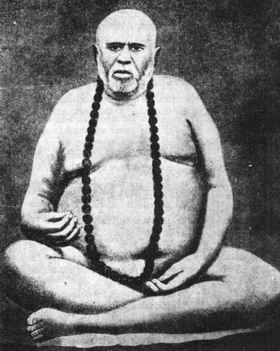
    Find peace within, for that is where your true strength lies.
    –Trailanga Swami

    Generally speaking, saints are rare and mystical beings in our world who manifest some higher consciousness which is innate in everyone and everything. They may take expression in the form of any gender, age, race or religion. Their saintliness may be apparent, obscure or even bewildering. Trailanga Swami was an enormous, always naked, 280-year old saint in India who British soldiers would securely imprison, until he would trans-locate from his cell to stroll on the prison rooftop. Certain religions and churches will designate a saint (or not) as if their acknowledgement is necessary to validate their status, when in fact it is the saints who are responsible for keeping the oft-misguided religions on track! 

    Saints are often inconvenient, and do not necessarily care much for religious customs or norms. The A-List of saints (A for Avatars: fully liberated, enlightened divine incarnations) like Buddha, Krishna, Jesus and Yogananda came–and will always come–to re-establish completely “new religions”, commonly disturbing or dismantling the preceding norms. This upsetting of the religious apple cart is a challenging, sometimes fun, and often painful long-rhythm process of keeping humanity on track morally and spiritually on this planet. St. Francis of Assisi stripped naked in public and renounced wealth in his supreme devotion to God, living in extreme poverty while singing joyful praise of the Lord and His natural world. Soon after, he drastically improved the course of Christianity and the history of the world.

    Lord, make me an instrument of thy peace. Where there is hatred, let me sow love. –St Francis of Assisi

    Of course there can never really be an old or a new religion or God. Jesus said “I have not come to abolish them [the Law or the Prophets] but to fulfill them.” (Matthew 5:17) The saints give a fresh expression to the same truth that God is divine love, peace and joy, shining through the natural world and the virtuous qualities of men and women throughout time. When more and more people realize this, they pray and meditate, sing joyfully and live simply for God and become little saintlets on their way. To this end Paramhansa Yogananda and Swami Kriyananda have given us countless spiritual books, talks, communities, music and so much more to support the elevation of consciousness in this age. Even a fraction of sincere practice and participation in these endeavors yields wonderful results. 

    One of my favorite quotes from Swami Kriyananda reduces it all so beautifully and simply: “I have found the more I think of God, and the less I think of me, the more everything somehow works out. And life becomes a song of joy when you live in this way.