Category: Spiritual Teachings

  • The Fearless Heart

    The Fearless Heart

    We recently celebrated a massive, beautiful week of Spiritual Renewal at Ananda Village with over 300 in attendance live, and at least that many tuning in online. The theme of the week resonated deeply with every heart: “The Battle of Life and How to Fight It”. Now is the time to keep our spiritual inspiration high, and to fight life’s battle with strength of heart.


    Looking forward to another inspirational community event closer to home, Ananda Portland will host Asha Nayaswami for a weekend of special events August 23-25. A special highlight will be Saturday, August 24th when Asha shares an inspiring morning workshop entitled Self-realization: The Fearless Heart, and joins us in celebrating the magical evening of Guru Night at our Ananda community together.
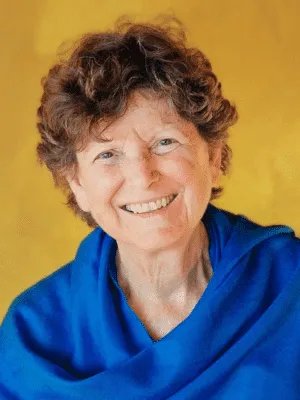
    The term “Fearless Heart” is an interesting concept and spiritual quality to contemplate. At some point on the spiritual journey, it becomes necessary to live from the heart increasingly not only by sweetness and love, but courage and fearlessness. The battle of life cannot be fought only with love–or if it can be, then sometimes that love must be fierce and fearsome, like the Hindu goddesses Durga or Kali.

    What does a fearless heart look like? A devotee or spiritual seeker has to be willing to walk the talk, to live and embody the spiritual teachings, even and especially when faced with opposition, challenge and hardship. It takes a developed and sensitive intuition, or calm feeling, to know how to act. Whether fighting the good fight with courage, or taking the path of acceptance and peace, the heart of a spiritual warrior can remain calm and centered like the deep waters of the ocean, whether below a surface of glassy stillness or raging waves.

    The practices of Kriya Yoga and all manner of yoga, meditation and other techniques are instrumental in developing this calm, clear center. But like the soldier who trains for battle, no preparation or simulation can ultimately compare to the actual chaos flying arrows, crashing swords, and deadly din of real battle. So too the yogi prepares diligently, whilst knowing that the most important preparation comes from a creative, unwritten whisper of the heart. That sensitive soul guidance will lead unerringly to smaller victories of right attitude and action, and the one true, everlasting victory of spiritual enlightenment. 

    Paramhansa Yogananda advised: “meet everybody and every circumstance on the battlefield of life with the courage of a hero and the smile of a conqueror.” This is the way of the fearless heart: armed with a brilliant smile of divine love and joy, plunging courageously into the battle of life wherever it leads.

    There is a war constantly waging in this world, and inside every conscious being. The numerous battles taking place are fought on the everyday field of our relationships and habits, thoughts and actions, and in the quiet stillness of yoga-meditation.

    It would be easier to avoid the many conflicts that beset us and the sufferings of life, but an easy life will not bring victory. Conflicts and sufferings are unavoidable, and only by prevailing with a brave heart will we continue to build the strength to win the battle. Then we can help others develop their own fearless hearts, and together win the final fruits of victory: freedom and joy forever. 



  • Facing Into the Hard Stuff

    Facing Into the Hard Stuff

    A friend who is prone to depression asked me a question that is difficult to answer
    easily. It’s a common question: How do we get through a difficult loss without becoming
    depressed when depression is our conditioned response?
    The uneasy part of the answer is that no easy answer exists. In truth, it is going to
    include a dose of even more difficult news that is best absorbed before the loss occurs.
    Nothing lasts.
    I should state here that I am not a therapist. I have studied grief, lived with some of it
    myself, taught workshops on death and dying, and listened as a spiritual counselor to
    many who were feeling overwhelmed by the anguishing loss of loved ones or promising
    dreams. I can only share what I’ve learned from experience along the way.
    Okay, to the uneasy truths… We need to prepare for certainties that are preordained.
    Life happens according to its agenda, not ours. Furthermore, everything finite – people,
    our pets, our own bodies too – comes with an expiration date engraved somewhere
    inside it. This isn’t personal, so don’t make it that.
    If we know these truths going in, we can get through the toughest blows without losing
    our balance, and get out at the end with gratitude and a loving smile for all that life has
    given us, blessings and adversities alike. Because all are blessings to grow on.
    Grief, as many have observed, is not a just-get-over-it experience. No one gets a free
    pass. But how do we keep it from becoming a ball and chain? Again, it isn’t a personal
    afront or punishment. Grief is meant to be absorbed, uplifted and assimilated calmly
    over time. When you give it a resting place in your heart, gratefully embraced, it stops
    beating you down.


    We are emotional creatures who tend to let outward events whirl us around.
    Circumstances are neutral, Paramhansa Yogananda said. It is we who submit to the whirl of meaning we
    give them. This can be exhausting when the meaning given is akin to assault and
    battery. “Don’t do that,” we tell ourselves, but often we’re unable not to. Our habit
    overrides our will.
    I shared in a recent piece that it helps to see things as already broken. That includes
    relationships, the mortal aspect of which is bound to end sooner or later because
    nothing mortal doesn’t. Is that cause for paralyzing grief, or could the truth of it add a
    deeper dimension to our enjoyment of what it is while it is?
    Loving that people, pets and things are with us for only a while is a way of setting them
    free and ourselves even more so. The longer we live, the more death we must accept.
    The alternative has no upside. It just hurts.
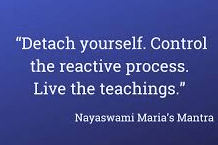
    As Maria Warner said to her loving husband Devarshi as she prepared them for her
    departure, “Detach [from the hard stuff ahead]. Control the reactive process. And live
    the teachings.”


    Love never dies. Why let its transition to another plane of being drive us into an agony
    that holds us hostage? Grieve, yes, but lovingly guide its pain to where it can soften.
    That’s where the upside lies, where wishing for what used to be can move to a sweeter
    place. Not easy, but suffering long is harder and worse.

  • Remember to Self-Forget

    Remember to Self-Forget

    I am of a “certain age,” as they say, when memory becomes less reliable. This can be hard to gracefully accept and adjust to. I can recollect in my youth having almost photo recall, when I could bring all kinds of information from storage to speech in an instant. Not so today. I depend more on writing notes and lists, which works fairly well when I remember where I’ve put them!

    I try to make light of these lapses – failing to think of a person’s name or where I left my keys – and I’m pretty good at letting them go. But the inconvenience can be… well, inconvenient. If you’re young and not yet dealing with this condition, trust me, your chance will come! 

    Driving around these days, we are likely to see a now familiar sign: “Road work ahead. Expect delays.” This is precisely the message I receive when slowing down to fix a cranial connection that has come apart. Suddenly there’s a flagger in the path of my mental acuity with a sign that says, “Stop,” and there I am, waiting for the signal to proceed, while the workers in my brain try to repair the link to wherever my thought was going.

    Most of us view the decline of memory with a measure of distress. Although it is largely a natural phenomenon, we tend to bemoan it, often with twinges of anxiety and vexation. Yet, even when a bit embarrassing, how important is this to our spiritual welfare and growth? Truly, it is not. 

    Several years ago I was returning from a month-long stay in India, bringing with me many things that belonged to my wife and me when we lived there. I was traveling alone with two 50 lb. suitcases, a 20 lb. carry-on, and a shoulder bag with wallet, money, cell phone, passport and boarding pass. 

    Getting from our ashram in Gurgaon to the Delhi airport at midnight became an awkward juggling act, made more problematic when five miles into the drive, I discovered that my cell phone was missing. Despite being almost compulsively careful to avoid such oversights, I had left it on a table where I was writing a thank-you note to my housemates before heading to the street and my waiting cab. On the way back to retrieve it, we hit some heavy traffic, and my nerves began to riot over the chance of missing my flight. 

    When I finally woke up what I was doing to myself, my focus shifted. Even if stranded for another day at the airport, how unfortunate would that be? Where would this episode fit in the longer rhythm of my life? Would I even remember it except as a story to share for a good laugh?

    What we really need to remember is to forget the voice inside us that causes us to lose our peace. 

    When I think of Swami Kriyananda, the trials of illness and betrayal he endured, and his enormous creative output in the very midst of them, what comes to mind above all is that none of that was ever about him. His self-forgetful attunement to God and Guru gave him what he needed when he needed it, and freed his inner peace from the onset of any disturbance. What he modeled for us was bliss under every circumstance. 

    It is tempting to excuse ourselves from that level of consciousness, to say that Swamiji was simply more advanced than any of us. Maybe so. But wouldn’t we like to be as he was? Remembering to forget ourselves is the “how to.”

    When “Road work ahead” causes cognitive delays or detours that take extra time and are out of the way, put it in perspective, and just give it a smile.

  • Supreme Devotion

    Supreme Devotion

    Love is the cosmic glue which holds this universe together with its interplay of countless swirling celestial bodies, and multitudes of hearts and minds. Paramhansa Yogananda’s own guru Swami Sri Yukteswar Giri was a stern yoga master who yet knew this wisdom of love. He wrote that “The first and most essential thing on the spiritual path is to uncover the natural love of the heart; without that one cannot take one step on the spiritual path.” 

    What really is the “natural love of the heart”, and how can we cultivate it? This is at the very core of every human experience and the all-pervading reality of this world: seeking universal love. Paramhansa Yogananda identified the simple premise that all beings are striving only to attain happiness, and to avoid suffering and pain. Love then, is the uniting force that brings happiness, and the soothing balm that heals all pain. It is the answer to every question, the key to unlock every door, and the secret ingredient in every recipe of life.

    Here are some all-important ways to cultivate divine love:

    1. Love God.  These two words comprise the summa totalis of all spiritual teaching. Loving God may be a challenge, an mystery, or a trigger for many people who do not understand, struggle with, or reject the very concept of God. And yet if we think of God as the highest potential within our own self, and the unifying consciousness of Spirit pervading and beyond all creation, there is an undeniable, beautiful truth to behold there. Even though we cannot comprehend God with the mind, by choosing to love God with the heart, we expedite our “understanding” and gradually, our oneness with God’s infinite love. We can love God more by directing our devotion to the Christ center at the point between the eyebrows especially in meditation, and by singing and devotional chanting to God.
    1. Love others as expressions of God. This is the natural expansion of love as our hearts enlarge the capacity for love. These two concepts comprise the greatest teaching of Jesus Christ to “Love the Lord thy God with all thy heart” and “love thy neighbor as thyself” which is feel our oneness with all in the love of God. 
    1. Pray for devotion. It is a strange and mystical truth that only by offering our little love, can we receive the great love of God. Prayer can open our hearts to receive the very love that we long for. Swami Kriyananda said, “Devotion is a gift of God and by your very act of prayer you are putting out the magnetism to draw that gift to you. Pray this simple prayer as often as you remember: ‘Divine Mother, awaken your love in me, and then help me to awaken that love in all.’”
    1. Tune into the Masters. The great masters of yoga and saints of all religions are those who have perfected love. Everything flows through channels in this world, and the perfect love of God is no exception. Focus on the perfect love of God expressed through these awakened masters in meditation, prayer and activity, and increasingly that divine love will fill your own heart and mind.

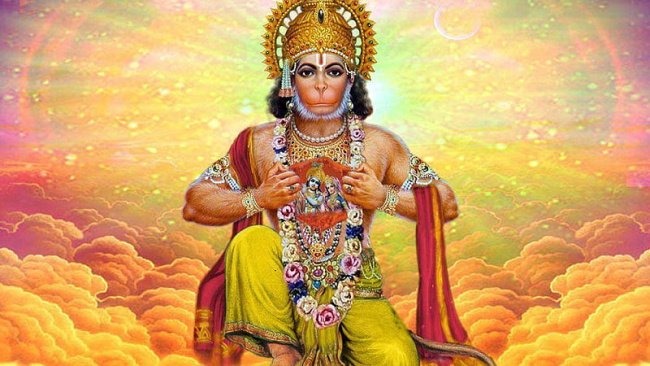
    Of all the sacred lore of yoga scripture of ancient India, one of the most beautiful scenes depicts the monkey god Hanuman, the most devoted follower of Lord Rama, revealing the secret of his legendary strength and endurance. It is said that even sparring against his lord the great Rama himself, that Hanuman could not be bested. When asked why, Hanuman opened his chest to reveal both Rama and Sita, the perfected masculine and feminine principles of Spirit, residing in his heart. Victory and success in everything comes when the love of God becomes the only focus of the heart.

    The ancient yoga master Patanjali identifies this principle in his famous Ashtanga Yoga, in one of the five Niyamas or observances, as Īśvarapraṇidhāna— supreme devotion, total surrender and commitment to the Lord. Once established in this divine self offering, the infinite Love of the God brings final yoga, or union with Spirit. 

  • See It As Already Broken

    See It As Already Broken

    Have you noticed how often you fight with yourself? It’s usually over wanting to do what know that you shouldn’t, or should do and really don’t want to. If you step back and watch from a neutral corner, the battle that ensues can get pretty amusing.

    “I really want to do this.”

    “But you should be doing that other thing instead.”

    “But I really want to do this, and I’m sure it will be okay.”

    “No, it’s a bad idea, and you know it.”

    “Yeah, well, I’m going to do it anyway, because if I don’t, I will be in a lousy mood, and that would be worse than not doing it.”

    We may not be masters of Self-realization, but most of us are pretty good at rationalizing the pursuit of an urgent desire in spite of what our higher awareness can see as a karmic mistake.

    Renunciation – turning away from what we really want – can seem like a terrible austerity, especially if self-discipline is not one’s strongest suit. But in matters of worldly distraction, it’s the most important action we can take. Swami Kriyananda viewed renunciation as a great spiritual investment that would accumulate in value far beyond that of ordinary wealth. All we have to do, he said, is “spurn the tempting magic” of things finite and fleeting.  

    Spurn? Couldn’t he have just said to make a sensible attempt? Spurn is not a word that offers any slack. If you’re going to spurn what you really want, you’re going to need plenty of willpower to do it, more than most of us are accustomed to mustering up. 

    “Do you like nice things?” 

    “Yeah, I do.”

    “Lots of nice things?”

    “Yeah, absolutely.”

    “How many nice things do you need?”

    “Well, I don’t know. Maybe I need to keep acquiring more until I figure that out!”

    Isn’t that the answer that most folks would give today? Renunciation is the easiest thing in the world to put on hold.

    “Yeah, I’ll get around to it one of these days, but I’m having kind of a tough time lately, and a little ‘tempting magic’ would really hit the spot.”

    So here’s the burning question: What is going to persuade us that spurning our compulsive tendencies will pay off like he says? The answer, of course, is to prove it to ourselves, one compulsion at a time, the easier ones first. Note the inner peace and joy that each victory brings.

    In moving from attachment to letting go, there’s a Zen way of looking at things that I find very helpful. Picture yourself holding your favorite cup. Feel how perfectly it fits in your hand, and say to it, “You are my favorite cup… and you are already broken.” Because someday it will be broken, or lost to you, or you will be lost to it. 

    Renunciation, whether of things, certain relationships, even the body you inhabit, is about accepting their ultimate impermanence. Truly enjoy your life and its countless gifts, think about doing more with less, and see what you have as already broken. In so doing, you free yourself of the stress, sadness and regret that might otherwise trouble your emotional state. 

    Agonizing over a loss is like punishing yourself twice for what you told yourself was yours and no longer is. Where is the value in that?

    I don’t mean to imply that letting go of a difficult loss should be easy. We know that it isn’t. But be aware that the suffering we invite is mostly due to seeing things as ours, when in truth, nothing is ours except to borrow and give back. Adopting an “already broken” point of view makes every setback more even-mindedly manageable.

    And just to finish where we started, the next time you get into one of those fights with that noisy voice in your head, pause and look farsightedly at what it wants you to do. Might it not be wiser to avoid the tangle and tribulations of where its advice tends to lead? 

  • I and Other

    I and Other

    Life is a dance. You’ve heard that before. Every moment offers a new set of rhythms and flows to interpret. Sometimes the dancing is done with beauty and grace, and sometimes not. The question is, in this tango of the intertwined, who is the one who leads when the tune is called? Is it I or Other?

    In the ballroom of human experience, attunement and trust are essential. This is not achieved, however, when the ego is in control. Unfamiliar with when, why and how to make the right moves, it can quickly turn the tango into an ungainly tangle instead. As comic relief, this can be entertaining, but not in a way that serves the choreography as designed.

    I have been amazed at times at how many of us, myself included, still find it hard to surrender the floor, even to the Other who knows better, namely the Guru. Thus, when resistance occurs, the dancing is apt to quickly devolve from smooth to painfully awkward.

    When we were kids, most of us were probably afraid of the dark. In bed alone, cringing under the covers at the slightest unfamiliar sound, we might have imagined the worst: an unseen presence that was out to get us. Our thoughts would race like stampeding horses, and turmoil would churn inside us until rescued by the soothing comfort of a loving parent.

    Darkness, in some ways, may frighten us more as we advance in years. In the shadows of our imagination, monsters of a different sort may gather, worries that we could lose what we treasure most: loved ones, our mental abilities and physical health. Maybe we worry, too, that death will find us unprepared to meet it. Only in daring to confront these unruly intruders do we come to understand what is really going on: that instead of trying to get us, something in our experience is trying to get us out! That is when Other, who knows the moves that can glide us again into grace, needs our unqualified trust.

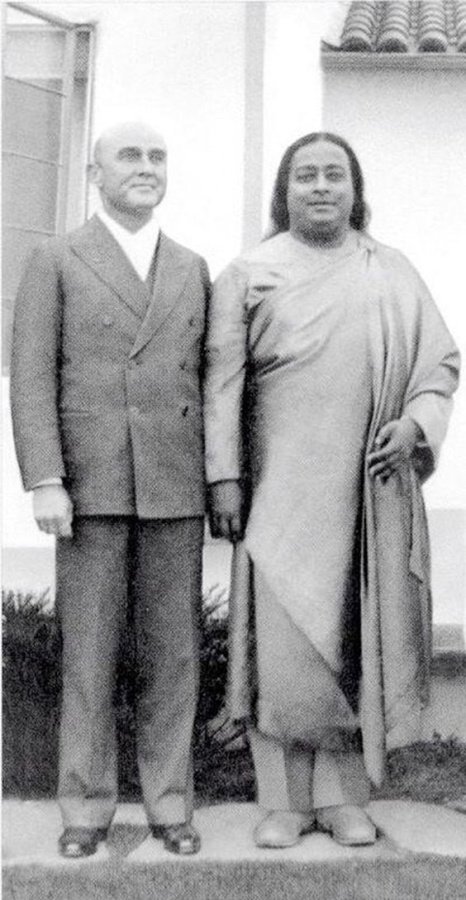
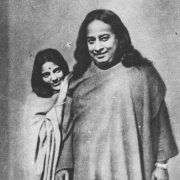
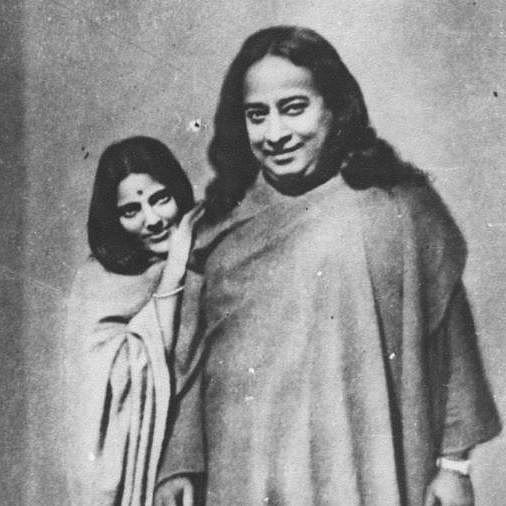
    Paramhansa Yogananda with his most spiritually advanced disciple James Lynn (Rajarsi Janakananda) 

    Ultimately the object of the dance is for Other and I to unite, becoming a seamless expression of blessing and communion. Saints and ascended masters have assured us that in this life or later on, we are all destined to reach that final state of Divine Bliss, more swiftly attained when Other is given the lead, helping us to become the dance itself.

    A true story in just a few sentences captures the essence of this more eloquently than any long treatise could. “This year began badly,” a woman wrote in her journal. “One day I woke up and started having seizures. They got worse and worse. It looked like a brain tumor, but it turned out to be epilepsy. Serious epilepsy. Now I am on medication for the rest of my life. It makes me clumsy. It makes me forget things. It makes me throw up.”

    The author slumped into a pall of self-pity. She stopped dancing altogether. And then in a single epiphany, she turned the whole experience right side up. “Now I realize this was a great year. It was the year I didn’t get a brain tumor.” What she got instead was a deeper love of life and all that it offers. With understanding and acceptance, she transformed her disease from a dreaded Other into the gift of a new, expansive I, and it took her to a place within herself of peace and light.

    Life is a dance. You’ve heard that before.

  • Community of Souls

    Community of Souls

    There is a place on this earth where friends come together, live side by side, and support each other in their individual search for God. Not a cloistered monastery or ashram only for those who renounce the world, a place for everyone. In fact, there are several such places. I have the great good fortune of being born into one such place – Ananda Village, the first of now eight Ananda communities around the world.

    It all started on a dark and snowy night, just five years after the whole place had burned to the ground. In fact, because of the fire that tore through Ananda Village in 1976, I was actually born in a make-shift ashram in the nearby town of Nevada City, California. It took another five months for my parents to secure one of the newly built dwellings in Ananda Village proper and move our little family of four into the community. 

    My early memories are filled with more joy, magic, and adventure than I could possibly share in a single article. Suffice it to say, being raised in a community founded on the principles of Self-realization and filled with the kindness of people seeking a personal relationship with the Divine is a gift that keeps on giving.

    Paramhansa Yogananda, whose teachings the Ananda communities are founded, once said, “Environment is stronger than will.” It is a strong statement, and one that has proven true for me again and again. When I set myself in an environment that supports the life I desire, it manifests with greater ease. That’s why I workout better in a gym, sing more beautifully in a temple, study better at the library, and meditate deeper in a sacred place. 

    This was such a challenge during the pandemic, right? For years, we had to set our homes up as a supportive environment for work, school, rest, and play.

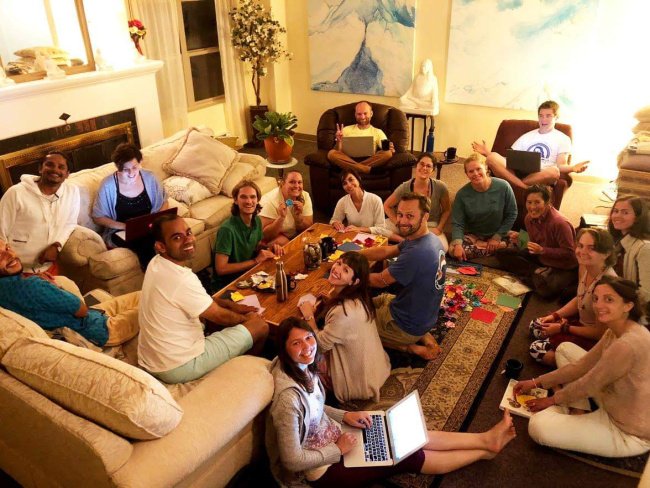
    Today, I live in the Ananda Community in Portland Oregon with my family. This is one of the most beautiful places I’ve had the joy to reside. When you enter from the quiet street, you are greeted by the lush landscapes leading up to home-like apartments, each unique yet harmonious. Smiling faces are often seen, as residents of the fifty units come and go in their daily activities. Many of us eat together on Sundays in the Living Joy Center, many meditate together in our little chapel. We host kirtans on the lawn in summer time and annual work days where we spruce up the community together. And while life continues to do its usual ups and downs, we all know that we are surrounded by a community of souls who care for our highest good. 

    Living in community supports my life in more ways than I can count, but today, I thought to share my top five:

    1. Peaceful vibrations: as soon as I enter the property I can feel the shift. A soft peace and a sweet joy are permeating my surroundings. 
    2. Deeper meditations: when I am here, whether in my home or in the chapel, my meditations are deeper. I believe it is a result of 30+ years of meditators who have come before and uplifted the environment here. 
    3. Spiritual friendships: whether on this path or another, those who live here are all seekers. Friendships here are rooted in this shared search for the Divine and it makes for lifelong bonds.
    4. Joyful service: there is nothing more fun or bonding than cooking a meal together for twenty, or pruning fruit trees together, or painting signs. My family loves workdays so much, we treat them like a national holiday! We toss on our overalls, pull out our gloves and tools, and are nearly always early to the coffee and muffin gathering and prayerful opening circle. 
    5. The long haul: for me, life is about Self-realization, the slow and steady journey toward my truest and highest self. To live among others with a similar purpose helps me remember this when I have become distracted, and be inspired when I need a lift. It’s like my favorite African proverb, “If you want to go fast, go alone. If you want to go far, go together.”  
  • The Custodians of Religion

    The Custodians of Religion

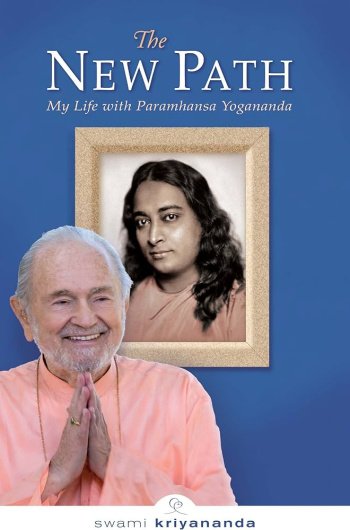
    In my early life lexicon, the term “custodian” referred only to the janitor at my elementary school. Later, in my early adult life, I read perhaps one of the greatest spiritual books ever written, The New Path by Swami Kriyananda. In Part II, Chapter 33: Original Christianity,  the author emphasizes and expounds an important message from Paramhansa Yogananda:

    “The saints alone are the true custodians of religion. For they draw their understanding from the direct experience of truth and of God, and not from superficial reasoning or book learning. The true saints of one religion bow to the divinity manifested everywhere, including of course to the true saints of other religions.”

    I know that I met at least one great saint in Swami Kriyananda himself. He demonstrated in countless ways, large and small, that his consciousness was elevated far beyond the average human state. He drew little attention to this however, as saints often do, and even obscured it at times. The famous French saint Joan of Arc said “If I am not, may God put me there; and if I am, may God so keep me.” Furthermore Swamiji and the saints encourage all of us, as fellow spiritual seekers, to consciously acknowledge, identify with, and develop the saintliness in ourselves and in one another. I remember one occasion Swami referred to all of us as “Saintlets”, or little saints. This has been a helpful practice to me spiritually–to look for and encourage the very best in myself and those around me.

    Find peace within, for that is where your true strength lies.
    –Trailanga Swami

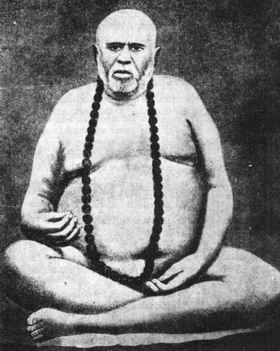
    Generally speaking, saints are rare and mystical beings in our world who manifest some higher consciousness which is innate in everyone and everything. They may take expression in the form of any gender, age, race or religion. Their saintliness may be apparent, obscure or even bewildering. Trailanga Swami was an enormous, always naked, 280-year old saint in India who British soldiers would securely imprison, until he would trans-locate from his cell to stroll on the prison rooftop. Certain religions and churches will designate a saint (or not) as if their acknowledgement is necessary to validate their status, when in fact it is the saints who are responsible for keeping the oft-misguided religions on track! 

    Saints are often inconvenient, and do not necessarily care much for religious customs or norms. The A-List of saints (A for Avatars: fully liberated, enlightened divine incarnations) like Buddha, Krishna, Jesus and Yogananda came–and will always come–to re-establish completely “new religions”, commonly disturbing or dismantling the preceding norms. This upsetting of the religious apple cart is a challenging, sometimes fun, and often painful long-rhythm process of keeping humanity on track morally and spiritually on this planet. St. Francis of Assisi stripped naked in public and renounced wealth in his supreme devotion to God, living in extreme poverty while singing joyful praise of the Lord and His natural world. Soon after, he drastically improved the course of Christianity and the history of the world.

    Lord, make me an instrument of thy peace. Where there is hatred, let me sow love. –St Francis of Assisi

    Of course there can never really be an old or a new religion or God. Jesus said “I have not come to abolish them [the Law or the Prophets] but to fulfill them.” (Matthew 5:17) The saints give a fresh expression to the same truth that God is divine love, peace and joy, shining through the natural world and the virtuous qualities of men and women throughout time. When more and more people realize this, they pray and meditate, sing joyfully and live simply for God and become little saintlets on their way. To this end Paramhansa Yogananda and Swami Kriyananda have given us countless spiritual books, talks, communities, music and so much more to support the elevation of consciousness in this age. Even a fraction of sincere practice and participation in these endeavors yields wonderful results. 

    One of my favorite quotes from Swami Kriyananda reduces it all so beautifully and simply: “I have found the more I think of God, and the less I think of me, the more everything somehow works out. And life becomes a song of joy when you live in this way.

  • The Trumpet Call of Friendship

    The Trumpet Call of Friendship

    The greatest joy and growth, pain and sorrows in this world all relate to our connection with others. And the highest form of connection is friendship. True friendship is a spiritual relationship of love, support and respect. Paramhansa Yogananda wrote “Friendship is God’s trumpet call, bidding the soul to destroy the walls which separate it from other souls, and from Him.”  

    My wife Gita and I will soon be sharing an inspirational workshop at our Ananda Portland Temple on this topic-–Radiant Relationships: A Yogic Approach to Love (join us in-person or online!). The focus is not intended for couples alone, which deserve special emphasis, but for all relationships which have basic and critical elements in common. Naturally we have been thinking of this topic and will share some of the following ingredients, crucial to the success of any relationship: 

    • Take care of yourself. Exercise, appearance, diet, meditation…what do these have to do with your friendships? If you are not in a healthy, balanced state it is hard to be at your best when relating to others. Meditation and spiritual practices, above all, help us relate with friends and loved ones from the highest place within us.
    • Have fun. Be willing to laugh at yourself. Don’t take life too seriously, and maintain a good sense of humor. People are weird–face it, you are weird!–and this world is full of weirdness. The best approach, especially when is to comes to oneself, is to try to have fun and keep it light, without sacrificing your depth—see above re: balance.
    • Learn to behave. Develop attitudes that will nurture your relationships such as thoughtfulness, kindness, and deep respect. Avoid acting or speaking out from an emotional state. Learn to accept and love others as they are. All our problems arise from our expectations of others, and of life. Remember, you are not the Guru of your spouse, friend or acquaintance. Be a good listener, a kind heart, and a thoughtful friend. 
    • Maintain perspective. Nothing is more important than your relationships. Don’t let “stuff” get in the way. As a great husband of many years’ once said: “When I married my wife, I told her I would make all the important decisions in our relationship. Since then there just haven’t been any important decisions to make.” Nothing is more important than our friends!

    Ananda exists to support people in the quest to realize God. The medium for this to happen is first and foremost through meditation and the loving relationship between soul and Spirit. Then it all comes down to our interactions with people—in our homes and families, work and service, play and social spheres. Take note–this is where the bulk of our karma and growth takes place!

    In fifteen years of living and serving at Ananda, far and away the greatest wealth I have acquired is true friendship: with myself, with others, and with God. Not a king’s treasury could compare in worth! There are hundreds of friends around the world who I share this deep connection with. While only a handful can be more personal, intimate friendships, the depth of true, divine friendship is timeless, transcendental and ever-sweet!  

    Prioritize these divine friendships over the less-important things in your life (hint: everything else) and nurture your soul relationships with all. The trumpet call of friendship is sounding! Will you answer the call?

  • Atomic Resolutions

    Atomic Resolutions

    Now is the time of resolutions, a time for making promises that are notoriously broken within weeks. Here in Portland, we’ve had an epic ice storm to contend with as we try to maintain ours! New Year’s resolutions are not simply a social construct. In fact, they are a natural expression of what is happening for us on an energetic level. 

    January 5th is the celebration of Paramhansa Yogananda’s birthday, a time for renewed inner commitment and fresh starts for many of us. January 14th the sun moves into the sign of Capricorn, which signifies the start to the astrological new year, according to the Vedic tradition. Capricorn starts the new year off with her commitment to hard work and her innate loyalty and ambition. As you can see, it’s a pretty good time to set new resolutions to achieve goals.

    Paramhansa Yogananda in his chapter in Autobiography of a Yogi called “Outwitting the Stars” talks with his guru Sri Yukteswar about how a great master is so attuned to the energies of both themself and the universe around them that they know how to flow with the celestial influences, rather than against them.

    So, how do we harness the time of Capricorn to actually succeed at these new year’s resolutions, rather than give them up before we’ve entered the sign of Aquarius on February 14th? For this answer, let’s consider both our personal experiences and the wisdom of the ages.

    On a personal level, new year’s resolutions are hit or miss for most of us. I remember the year I decided to quit smoking cigarettes (2000). I woke one day in January and decided that they tasted bad and that I wasn’t a smoker. I quit that day. From there, I had to disassociate every activity that I previously associated with smoking – walking, drinking coffee, driving, socializing. It was primarily an exercise of re-visioning my life now as a nonsmoker. Once I had a clear vision of my new self, the habit slowly lost its power.

    The teachings of yoga offer many valuable tools on the road to building new habits. Swami Kriyananda taught us that to make meditation a daily habit there are important things we can do such as creating an uplifting space for meditation, committing to certain times of day for our practices, finding others to meditate with, studying the lives of saints and masters, and most of all, cultivating the heart’s devotion to the Divine.

    What all of these guidelines suggest is that to succeed at building new habits, it takes more than habit tracker apps. We must cultivate commitment on four levels:

    1. The physical: what structure do we have in place to support the achievement of our new goal?  
    2. The mental: what ideas and attitudes are we cultivating to support the achievement of our goal?
    3. The emotional: is our heart in it? Can we light the fire of our desire towards whatever we set out to achieve and then maintain that fire ever-burning?
    4. The spiritual: how is this goal in alignment with our highest Self? What is the driving energy behind it? How is this helping in our soul’s evolution?

    In the popular book Atomic Habits: Tiny Changes, Remarkable Results, James Clear has a number of excellent suggestions about how to make new habits stick. At the heart of his thesis is this universal truth: who you believe yourself to be drives the daily actions that accumulate as habits to create your life. 

    So, if your resolution is about deepening your spiritual life, it is wise to consider what you believe about yourself as a spiritual being and what you think one ought to look like. One common pitfall on the path to creating habits of spiritual practice is the belief that to be successful, one must look a certain way, act a certain way, and feel only certain feelings. 

    Surrender, When You're Trying Too Hard - Ananda India

    The great saints are excellent teachers on this subject for they come in every imaginable shape and size and personality. As we study their lives and our own, we come to see the Divine dancing through a myriad of forms. Behind each one, we recognize the consciousness that animates the dancer. And thus we begin to redefine what it means to be spiritual and set ourselves up for truly successful resolutions