We live in a world that celebrates multi-tasking. Getting hired for any management position seems to make this a priority skill. The presumption is that it facilitates productivity.
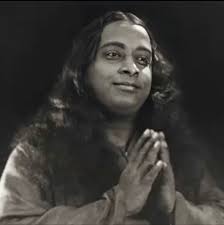
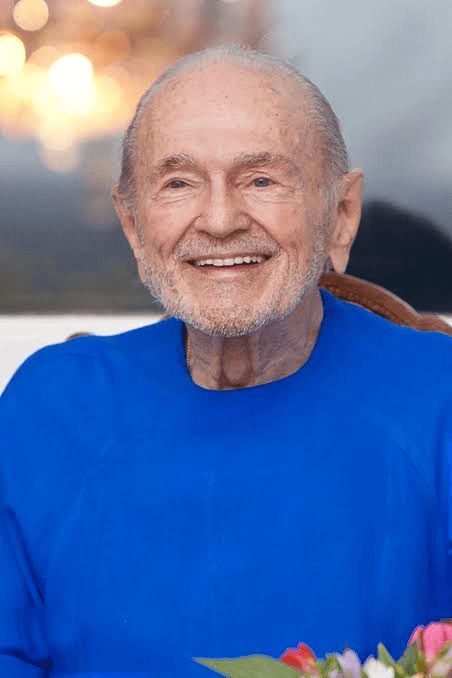
As any parent or teacher of small children knows very well, situations often arise that interrupt one’s focus. But is multi-tasking an optimal design for attentive living, for managing stress, for achieving success? Consider the creativity, inspirational impact and enormous body of work of Swami Kriyananda – his music, books, lectures, whole communities – all brought to life with total focus, one undertaking at a time.
Can you multi-task while meditating? It curses the intended effect. Concentration and stillness flee the scene.
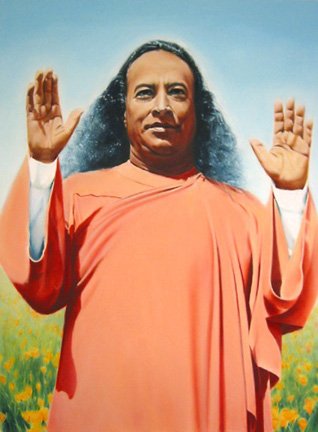
An axiom often repeated by Paramhansa Yogananda is another key to success: “The greater the will, the greater the flow of energy; and the greater the flow of energy, the greater the magnetism.” Whatever you want, you have to act with commitment, confidence and courage. The weaker the will, the weaker… You get it.
Another secret of success is self-study. What is it that you want? If you have failed to achieve it, why? Yogananda would constantly remind his disciples, “The season of failure is the best time for sowing seeds of success.” Get back on that horse, but with a clear understanding of what will keep you from being thrown again. Too often we approach a challenge with the same mindset that didn’t work the first time or the second or…. Stop! It’s time to rethink what you thought.
With humor and truth, probably from an old Reader’s Digest, a one-liner claimed that when you want to get somewhere, you have to know three things: where you came from, where you are going, and where you left your keys.
Ultimately, of course, the vehicle is oneself, the destination is Self-realization, and the keys are the principles that comprise a dharmic life. But in our multi-task society, even with the best intention, help is needed to keep us from driving in materialistic circles, unable to locate the exit ramp. I, like many, once believed that I could find it on my own. I wasn’t ready for the true Guru to appear.
Worldly goals need not be at the expense of spiritual gain. They can, indeed, serve a higher purpose than personal ambition and self-indulgence, thereby serving also to invite the Guru’s appearance. The question then is who is given the lead, you or the Guru? “Open your heart to me,” the Guru says, “and I will enter and take charge of your life.” Are you ready for that too? How quickly do you want to reach where the Guru wants to take you? How willing is your will to let go of what’s in the way?
The Guru is an emissary of God. It is God’s guidance that is offered, along with God’s infinite abundance. Success in this world, no matter how great, vanishes the moment we die. The multi-tasker is instantly redirected to a whole new dimension of focus where that skill is of no use. Better to seek the true success of achieving our soul’s freedom. Eyes on the prize.
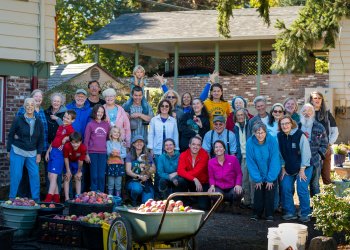
At Ananda, we often speak of the blessings that come from living in intentional communities rooted in high ideals and simple living. Paramhansa Yogananda envisioned these “world brotherhood colonies” as models for sustainable living in Dwapara Yuga. As he prophesied, “World brotherhood colonies will spread like wildfire!”
Community creates social connections that have a measurable impact on our health and wellbeing. Small, intentional communities allow for greater shared resources and a lesser impact on the environment. Intergenerational communities make caregiving less isolating and nurture friendships between the young and the old. For Ananda, community most especially supports our desire to center God in our lives.
Rarely will you hear one of us at Ananda speak of the challenges that community living brings to our lives. And yet we know as seekers of Self-realization that challenge is an important catalyst for spiritual growth. So, what are the hardest parts of living in a community? What can we learn from them? How can we overcome them?
Othering
This is one of the more recent criticisms of communities by scholars on the subject. Critics argue that communities, by nature, draw boundaries that create insiders and outsiders. While there’s some truth to this, it’s equally true of families, cultures, or any form of group identity.
Othering is something we must overcome if we are to experience our oneness with the Divine, which is the whole purpose of yoga. In his series of speeches titled, A World Without Boundaries, Paramhansa Yogananda lays out the road map to overcoming this human tendency. We begin, he suggests, within our own selves. We shed light on the prejudices that our personal experiences, family and society lodged within us. We release them in the realization that we are all children of God. Next, we expand our love until we love all the world as our family. To do this, we meditate to expand and uplift our consciousness.
In creating Ananda Village, Swami Kriyananda made it an early order of business to create a retreat center for people to stay and receive what we have to share. This was no accident. Ananda’s early and lasting emphasis on sharing the teachings is a positive, outward pulling force that helps our communities constantly seek to serve others beyond our ‘membership.’ Swami traveled the world, wrote books, lectured publicly, and touched everyone he met with his warm smile. He encouraged us to start schools, businesses, and philanthropic endeavors.
Here in Ananda Portland, we do this through our seva with local nonprofits and, like Swami, with our events, writings, classes and by supporting interfaith events aimed at uplifting consciousness. Community, by its nature, has a boundary yes, but that does not mean we cannot consciously expand ourselves to include others in meaningful and uplifting ways. As Swami says in his book Education for Life, maturity is,”the ability to relate appropriately to other realities than one’s own.”
Collective Over Individual
As a highly individualistic society, the idea that one might place the collective good ahead of our own self interest is seen as oppressive and absurd. And yet, the consequences of this extreme adherence to individual interest is a root cause of our social and environmental crisis today.
I study and teach wild horse behavior for precisely this reason. By understanding the social structure of horses, I see more objectively how a healthy community thrives when the collective good is placed first. Horses have roles, but not hierarchy. The roles exist for the health and safety of the herd. When a lead horse is injured or needs to rest, another will graciously take its place until the original horse is ready to serve. How is leadership assigned? By consensus, the herd follows the horse with the most consistent good judgement.
As with all things, the Buddha’s wisdom applies here, “the middle path is the way.” Through trial and error, those of us living in community learn that we cannot and should not suppress our individuality or abandon our own inner knowing. But we also learn that if we do not consider the impact our decisions have on the collective, for better or worse, we soon find ourselves walking away from our community entirely.
I recall a time when I was working with a mentor in my equine assisted learning practice who said to me, “when you talk about your life, it’s as if Ananda is another person in your nuclear family.” This was an astute observation. What we learn, if we are to make community living last, is that we do well to consider how our personal choices impact the whole because they do. The more we live in that knowing, the more we live congruent with this Divine truth: we are one.
Harmony Over Conflict
When we enter the social contract of community, much like marriage, we discover that what we say matters. There are no take backs. With our spouses and children, we learn very quickly that there are times to speak up, times to listen, and times to live and let live. An excellent rule of thumb offered by Swami Kriyananda when deciding whether to say what you see is this, “Is it true? Is it helpful?”
Through the course of community living we find ourselves faced with opportunities to decide what we will say, to whom, and how. It may be something small, like an annoyance from a neighbor. It may be more significant, like the observance of someone’s risky behavior.
During the pandemic, I sometimes received calls from fellow community members concerned about my choices. My family had created a small pod with a few other households to care for our young children. Though we kept public contact minimal, some still viewed our approach as risky and let us know. I didn’t love receiving those calls—but I reminded myself: this was a friend, afraid. I, too, was afraid. I made the best choices I could for my family, took precautions, and did my best to respond with kindness.
Another horse wisdom mentor of mine once said, “harmony is the resolution of conflict, not its absence.” This hit home as a balance point to the desire to maintain harmony over honesty. It is okay to disagree and have challenging conversations. Just pick your battles with discernment and remember that harmony is the goal. To achieve resolution, we should listen with an open mind and speak with an open heart.
The wedding vows that Swami Kriyananda wrote sum this up exceptionally well, “I will respect your right to see truth as you perceive it, and to be guided as you feel deeply within yourself.”
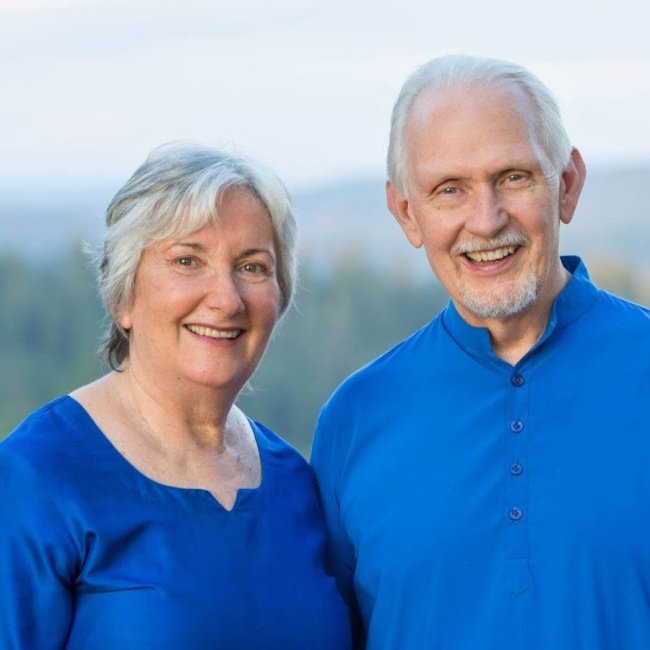
Join us at New Renaissance Bookshop for an evening of music, inspiration, and deep spiritual wisdom as we welcome Jyotish & Devi, the spiritual leaders of Ananda, for a special gathering. This free event offers a chance to explore how spiritual community can uplift our world, bringing hope, connection, and divine light into our lives.
✨ Inspiring Talks 🎶 Uplifting Music ❓ Q&A with Jyotish & Devi
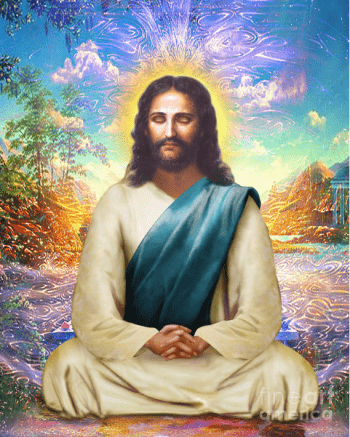
It’s now Christmas time: the greatest, most holy time of year. We celebrate with so many traditions all over the world, including many other holy days and observances unrelated to the birth of Jesus Christ. But it is universally recognized as the sacred season where even the astronomical and astrological phenomenon align with an increase of light in the darkest of times. Every tradition, culture and expression in some way relates to the deeper meaning of Christmas time: not only the birth of the universal, divine Christ consciousness, but the awakening of that same divine light in everyone and everything. One of the most extraordinary special traditions is Paramhansa Yogananda’s 8-hour Christmas meditation, practiced at Ananda Portland and by devotees all over the world, meditating deeply to awaken in Christ’s light.
This world is both matter and Spirit, and the awakening Christ in all every thing, and each individual, is the scintillating super highway to become a Christ oneself and realize that divine consciousness everywhere. Swami Kriyananda wrote a beautiful song in which each line beautifully describes this path of awakening in Christ’s light:
When human hopes toward Thee aspire, dark woods of grief are set afire. When someone, anyone, consciously aspires towards higher consciousness and God, that same lamp of devotion ignites the fire that eventually transmutes all human grief, sorrow and suffering. Yogananda said: “Remember that finding God will mean the funeral of all sorrows.” The conflagration of these very real and difficult human experiences goes up in self offering, the rising smoke of blissful freedom in its release.
Beyond all reach of earthly skill, Thy love alone our hearts can fill. Nothing in this human experience can fill our hearts: relationships, money, travel, lavish gifts…this world is an unfortunate combination of endless pleasures (and pains) which will never, ever fill the void in our hearts. We may imagine or construct a series of false joys, but in the end we will always be insecure, lonely, fearful or otherwise incomplete without God. Fortunately it is a two way street: when we finally seek God earnestly with devotion, our hearts gradually and spontaneously become full with God-happiness and peace. In the prayerful words of St. Augustine “Thou hast formed us for Thyself, and our hearts are restless till they find rest in Thee.”
Christ’s light that shone on earth from heaven opened for us the inner door. The guru or avatar, most famously represented beautifully as Christ, opens the inner door for us to enter the realms of divine consciousness. We cannot get there without kriya yoga: the practice of transmuting our inner energies by pranayam and Guru’s grace. Yogananda describes the path through the inner door as “deeper, longer, Guru-given meditation”, where at least comes the “celestial Samadhi”, final union with God through Christ.
To all who love the gift is given: joy and freedom evermore! Love is only a humble word which hints at the divine, cosmic power underlying and overarching everything in this universe and far beyond. Love is synonymous with God, and is the final answer and only solution to everything in this world. Sri Yukteswar said that “Divine love is without condition, without boundary, without change. The flux of the human heart is gone forever at the transfixing touch of pure love.” This is the love of God and Guru, the real and only summum bonum of this world, through which our own steadfast seeking, meditation and loving, will give us the ultimate gift of joy and freedom, evermore.
Life is nothing if not an adventure. Each new day brings opportunities to explore the vast landscape of life. How we spend our time reveals much about who we are and where we’re going, and our attitudes and approach to life often determine the pace and rhythm at which we get there. Swami Kriyananda wrote “Life is a great adventure. Look around you: There are trails leading off in all directions to new discoveries!”
Where will we go and what will we discover? How to know which trail to take? One of the greatest trails is service to others. As long as we limit our life’s experiences to our own little world and life, we curtail the potential for our own expansion and growth. While some exceptional person might achieve great money, fame or success, life will remain somehow empty without a meaningful way to give back in service to others. Not only a principle of life, service or seva is a powerful spiritual practice to expand from ego to Spirit consciousness. Seeing and serving God in others opens the heart and expands the mind. Then helping others enriches our experiences and fosters joyful self discovery.
At Ananda Portland we are blazing a new trail of discovery with our Service Adventure Club. The inspiration includes working with some of the children in our Sangha to put these principles into practice: seeking adventure and service consciously in our community together. With a little yoga and meditation practice as our foundation, we’ll partner with local non-profits to volunteer our time and energy to help others. We’ll also explore the wonders of the natural world together and foster a sense of joyful discovery and awe. And we’ll do it as a community, a Sangha in the sense of a spiritual family with bonds of kindness, respect and love.
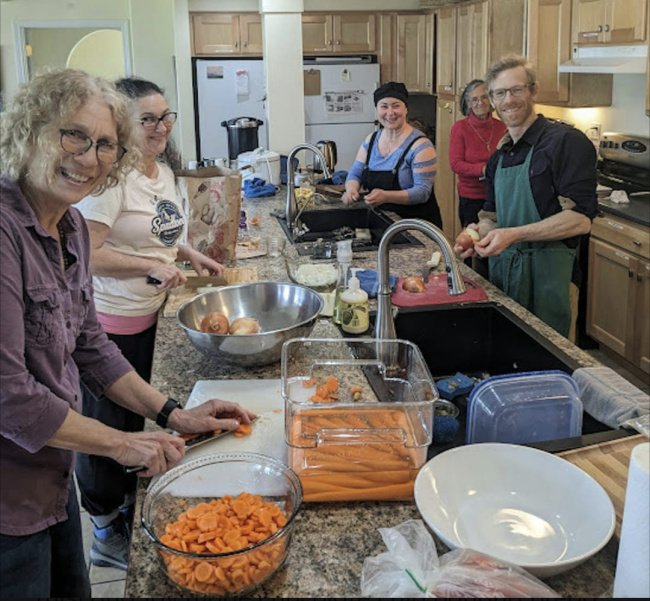
Our first adventure includes an invitation to our broader Sangha to join us in volunteering at HomePlate Youth Services, our next door neighbors to the Ananda Portland Temple in Beaverton. We’ll be preparing and serving meals for up to 40 youths experiencing instability in their lives–all with a spirit of loving service and joy. Consider supporting this effort by volunteering your time or helping with resources to feed these hungry kids–but only if you feel the call of adventure! Click here to answer the call and serve with us 🙂
The most meaningful experiences of life are never scripted. They come from an unwritten story of magic and love which interconnects everything in this world. When we expand ourselves in service to others, in a spirit of adventure and self-discovery, our own story gets so much more interesting, fulfilling and fun.
Last week on Rise in Freedom, Gita reflected on the covid pandemic and how to find our way through uncertain times. Continuing that theme, the pandemic and times like it may well have be times when, like the brilliant writer PG Wodehouse’s character Bertie Wooster once inquired:
“There are moments, Jeeves, when one asks oneself, ‘Do trousers matter?’” to which his faithful valet Jeeves’ stoically replied: “The mood will pass, sir.”
Beyond the philosophical question of trousers in moments of dejection and difficulty, the world today is a hotbed of rapid change and uncertainty, making the quest for peace a spiritual obligation. But raising our consciousness isn’t just a personal endeavor; it is a collective necessity that can transform society from the ground up.
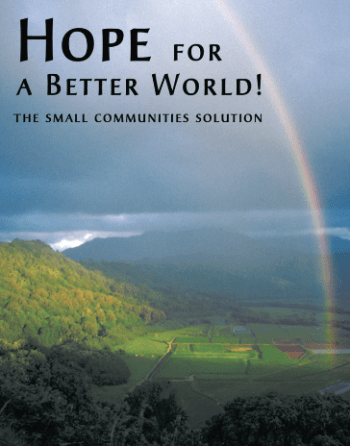
In his book Hope for a Better World, Swami Kriyananda emphasized that the solution to humanity’s challenges is not in changing systems but elevating consciousness: “What will raise humanity…is a higher consciousness – something that groups, particularly, can demonstrate.” This collective shift in consciousness can be much more effective and inspiring than isolated individual efforts. The monasteries of the Dark Ages are a classical example where collective spiritual practices helped to preserve and elevate civilization in times of global turmoil.
Swamiji also describes the disintegration of old, form-bound consciousness and the emergence of a more flowing, intuitive consciousness. He writes: “We are at a time of a greater awakening of the spirit, not just sort of an intuitive flow in our work and in our dealings and so on, but a greater awareness of who we really are.” This shift involves recognizing that energy is the fundamental force behind our actions and thoughts. By becoming more aware of this energy and working with it consciously, we can better navigate the complexities and difficulties of life.
In times of global instability and change, the greatest reforms will come from small groups made up of dedicated individuals rather than through systemic or political efforts. Ananda is one such group, made up of countless individuals dedicated to sincere practice of yoga, meditation, service and devotion to uplift consciousness. While there are many such groups creating positive change, the majority of humankind only spins the wheels of the world’s problems in place. Again on this subject Swamiji writes: “Human problems have their roots deep in human nature. Their only possible solution lies quite outside the political arena – in a broad shift of consciousness.” And rather than the simple fact of the noble Jeeves’ truth that “the mood will pass”, there lies a far greater opportunity at the heart of it.
Interestingly, the most dark and difficult times of change can serve as the catalyst for the greatest spiritual awakening and growth. Many saints and mystics have foretold of great suffering, cataclysm and economic disaster. But these objectively negative experiences hold a secret key of transformation for all those who can leverage it. Everyone who is alive during a given period of global challenge shares a common karma, one which earnest spiritual seekers consciously choose to live and grow through.
Not only can we weather any storms that come, we can each put our trousers on to create tremendous positive change–raising our individual and collective consciousness. The effects will ripple out and bring greater peace and harmony throughout the world, and serve as a beacon of hope in challenging times.
We recently celebrated a massive, beautiful week of Spiritual Renewal at Ananda Village with over 300 in attendance live, and at least that many tuning in online. The theme of the week resonated deeply with every heart: “The Battle of Life and How to Fight It”. Now is the time to keep our spiritual inspiration high, and to fight life’s battle with strength of heart.
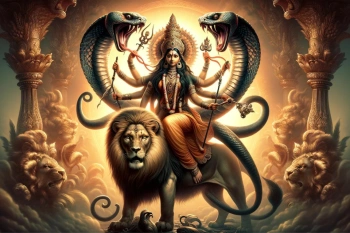
The term “Fearless Heart” is an interesting concept and spiritual quality to contemplate. At some point on the spiritual journey, it becomes necessary to live from the heart increasingly not only by sweetness and love, but courage and fearlessness. The battle of life cannot be fought only with love–or if it can be, then sometimes that love must be fierce and fearsome, like the Hindu goddesses Durga or Kali.
What does a fearless heart look like? A devotee or spiritual seeker has to be willing to walk the talk, to live and embody the spiritual teachings, even and especially when faced with opposition, challenge and hardship. It takes a developed and sensitive intuition, or calm feeling, to know how to act. Whether fighting the good fight with courage, or taking the path of acceptance and peace, the heart of a spiritual warrior can remain calm and centered like the deep waters of the ocean, whether below a surface of glassy stillness or raging waves.
The practices of Kriya Yoga and all manner of yoga, meditation and other techniques are instrumental in developing this calm, clear center. But like the soldier who trains for battle, no preparation or simulation can ultimately compare to the actual chaos flying arrows, crashing swords, and deadly din of real battle. So too the yogi prepares diligently, whilst knowing that the most important preparation comes from a creative, unwritten whisper of the heart. That sensitive soul guidance will lead unerringly to smaller victories of right attitude and action, and the one true, everlasting victory of spiritual enlightenment.
Paramhansa Yogananda advised: “meet everybody and every circumstance on the battlefield of life with the courage of a hero and the smile of a conqueror.” This is the way of the fearless heart: armed with a brilliant smile of divine love and joy, plunging courageously into the battle of life wherever it leads.
There is a war constantly waging in this world, and inside every conscious being. The numerous battles taking place are fought on the everyday field of our relationships and habits, thoughts and actions, and in the quiet stillness of yoga-meditation.
It would be easier to avoid the many conflicts that beset us and the sufferings of life, but an easy life will not bring victory. Conflicts and sufferings are unavoidable, and only by prevailing with a brave heart will we continue to build the strength to win the battle. Then we can help others develop their own fearless hearts, and together win the final fruits of victory: freedom and joy forever.
There is a better way to live in this world, and we are helping to create and share that way together. People everywhere have had enough of selfishness, divisive politics, lack of right living and kindness and respect. While we cannot solve all the world’s complex and difficult problems, we can create a powerful momentum to help support the many necessary changes and solutions. By simplifying our lives, banding together in communities, and establishing universal spiritual ideals we are effecting immense positive change.
On July 31, 1949, at a garden party in Beverly Hills, Paramhansa Yogananda emphatically said: “This day marks the beginning of a new era! My spoken words are registered in the ether, in the Spirit of God, and they SHALL MOVE THE WEST! . . . We must go on—not only those who are here, but thousands of youths must go north, south, east, and west to cover the earth with little colonies, demonstrating that simple living plus high thinking produce the greatest happiness.”
Among the many gathered there that day, perhaps the only person present who truly took these words to heart was Swami Kriyananda. He would go on to dedicate nearly 65 years to this mission of Yogananda’s, founding and supporting successful spiritual communities all over the world. While our Ananda communities continue to thrive, we now have the responsibility to further the creative expression and expansion of spiritual community into the future. Of course there are numerous wonderful examples of community besides Ananda, and all over the world these little “cities of light” form a beautiful tapestry of harmonious living, trailblazing a path of light for the future of this world.
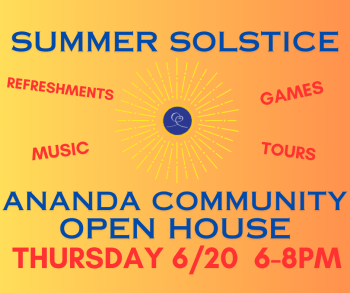
Today is the summer solstice in the northern hemisphere, the longest day of the year and an auspicious time of change and growth. Our miraculous and life-giving sun is a symbol of the divine Light that shines through all nature, in every heart and mind, and scintillates in every atom of creation. As we celebrate the official beginning of the season of summer, we also continue to tread the path of Light that brings great unity, peace and happiness in a yet confused and troubled world.
Ananda Portland is celebrating the solstice and community with an Open House, sharing the gifts of music, food and drink, playfulness and friendship with friends old and new. The essence of community is not only the important physical place and proximity we live, but the spirit of cooperation, unity and joy that pervades our relationships and lives. We hope you can join us for this special event, and in this special lifestyle which produces the greatest happiness.
I am of a “certain age,” as they say, when memory becomes less reliable. This can be hard to gracefully accept and adjust to. I can recollect in my youth having almost photo recall, when I could bring all kinds of information from storage to speech in an instant. Not so today. I depend more on writing notes and lists, which works fairly well when I remember where I’ve put them!
I try to make light of these lapses – failing to think of a person’s name or where I left my keys – and I’m pretty good at letting them go. But the inconvenience can be… well, inconvenient. If you’re young and not yet dealing with this condition, trust me, your chance will come!
Driving around these days, we are likely to see a now familiar sign: “Road work ahead. Expect delays.” This is precisely the message I receive when slowing down to fix a cranial connection that has come apart. Suddenly there’s a flagger in the path of my mental acuity with a sign that says, “Stop,” and there I am, waiting for the signal to proceed, while the workers in my brain try to repair the link to wherever my thought was going.
Most of us view the decline of memory with a measure of distress. Although it is largely a natural phenomenon, we tend to bemoan it, often with twinges of anxiety and vexation. Yet, even when a bit embarrassing, how important is this to our spiritual welfare and growth? Truly, it is not.
Several years ago I was returning from a month-long stay in India, bringing with me many things that belonged to my wife and me when we lived there. I was traveling alone with two 50 lb. suitcases, a 20 lb. carry-on, and a shoulder bag with wallet, money, cell phone, passport and boarding pass.
Getting from our ashram in Gurgaon to the Delhi airport at midnight became an awkward juggling act, made more problematic when five miles into the drive, I discovered that my cell phone was missing. Despite being almost compulsively careful to avoid such oversights, I had left it on a table where I was writing a thank-you note to my housemates before heading to the street and my waiting cab. On the way back to retrieve it, we hit some heavy traffic, and my nerves began to riot over the chance of missing my flight.
When I finally woke up what I was doing to myself, my focus shifted. Even if stranded for another day at the airport, how unfortunate would that be? Where would this episode fit in the longer rhythm of my life? Would I even remember it except as a story to share for a good laugh?
What we really need to remember is to forget the voice inside us that causes us to lose our peace.
When I think of Swami Kriyananda, the trials of illness and betrayal he endured, and his enormous creative output in the very midst of them, what comes to mind above all is that none of that was ever about him. His self-forgetful attunement to God and Guru gave him what he needed when he needed it, and freed his inner peace from the onset of any disturbance. What he modeled for us was bliss under every circumstance.
It is tempting to excuse ourselves from that level of consciousness, to say that Swamiji was simply more advanced than any of us. Maybe so. But wouldn’t we like to be as he was? Remembering to forget ourselves is the “how to.”
When “Road work ahead” causes cognitive delays or detours that take extra time and are out of the way, put it in perspective, and just give it a smile.
Love is the cosmic glue which holds this universe together with its interplay of countless swirling celestial bodies, and multitudes of hearts and minds. Paramhansa Yogananda’s own guru Swami Sri Yukteswar Giri was a stern yoga master who yet knew this wisdom of love. He wrote that “The first and most essential thing on the spiritual path is to uncover the natural love of the heart; without that one cannot take one step on the spiritual path.”
What really is the “natural love of the heart”, and how can we cultivate it? This is at the very core of every human experience and the all-pervading reality of this world: seeking universal love. Paramhansa Yogananda identified the simple premise that all beings are striving only to attain happiness, and to avoid suffering and pain. Love then, is the uniting force that brings happiness, and the soothing balm that heals all pain. It is the answer to every question, the key to unlock every door, and the secret ingredient in every recipe of life.
Here are some all-important ways to cultivate divine love:
Love God. These two words comprise the summa totalisof all spiritual teaching. Loving God may be a challenge, an mystery, or a trigger for many people who do not understand, struggle with, or reject the very concept of God. And yet if we think of God as the highest potential within our own self, and the unifying consciousness of Spirit pervading and beyond all creation, there is an undeniable, beautiful truth to behold there. Even though we cannot comprehend God with the mind, by choosing to love God with the heart, we expedite our “understanding” and gradually, our oneness with God’s infinite love. We can love God more by directing our devotion to the Christ center at the point between the eyebrows especially in meditation, and by singing and devotional chanting to God.
Love others as expressions of God. This is the natural expansion of love as our hearts enlarge the capacity for love. These two concepts comprise the greatest teaching of Jesus Christ to “Love the Lord thy God with all thy heart” and “love thy neighbor as thyself” which is feel our oneness with all in the love of God.
Pray for devotion. It is a strange and mystical truth that only by offering our little love, can we receive the great love of God. Prayer can open our hearts to receive the very love that we long for. Swami Kriyananda said, “Devotion is a gift of God and by your very act of prayer you are putting out the magnetism to draw that gift to you. Pray this simple prayer as often as you remember: ‘Divine Mother, awaken your love in me, and then help me to awaken that love in all.’”
Tune into the Masters. The great masters of yoga and saints of all religions are those who have perfected love. Everything flows through channels in this world, and the perfect love of God is no exception. Focus on the perfect love of God expressed through these awakened masters in meditation, prayer and activity, and increasingly that divine love will fill your own heart and mind.
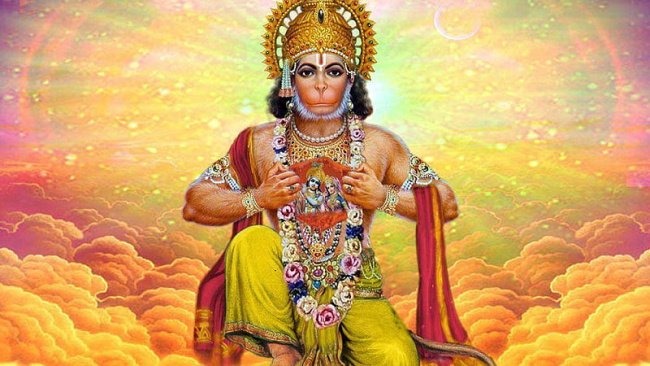
Of all the sacred lore of yoga scripture of ancient India, one of the most beautiful scenes depicts the monkey god Hanuman, the most devoted follower of Lord Rama, revealing the secret of his legendary strength and endurance. It is said that even sparring against his lord the great Rama himself, that Hanuman could not be bested. When asked why, Hanuman opened his chest to reveal both Rama and Sita, the perfected masculine and feminine principles of Spirit, residing in his heart. Victory and success in everything comes when the love of God becomes the only focus of the heart.
The ancient yoga master Patanjali identifies this principle in his famous Ashtanga Yoga, in one of the five Niyamas or observances, as Īśvarapraṇidhāna— supreme devotion, total surrender and commitment to the Lord. Once established in this divine self offering, the infinite Love of the God brings final yoga, or union with Spirit.