Category: Swami Kriyananda

  • See It As Already Broken

    See It As Already Broken

    Have you noticed how often you fight with yourself? It’s usually over wanting to do what know that you shouldn’t, or should do and really don’t want to. If you step back and watch from a neutral corner, the battle that ensues can get pretty amusing.

    “I really want to do this.”

    “But you should be doing that other thing instead.”

    “But I really want to do this, and I’m sure it will be okay.”

    “No, it’s a bad idea, and you know it.”

    “Yeah, well, I’m going to do it anyway, because if I don’t, I will be in a lousy mood, and that would be worse than not doing it.”

    We may not be masters of Self-realization, but most of us are pretty good at rationalizing the pursuit of an urgent desire in spite of what our higher awareness can see as a karmic mistake.
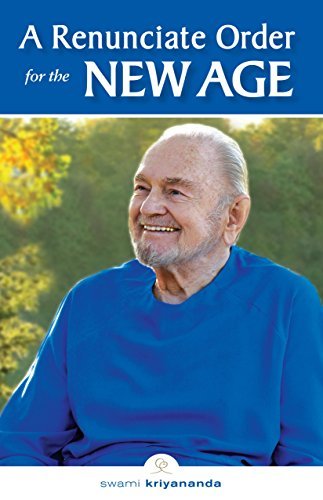
    Renunciation – turning away from what we really want – can seem like a terrible austerity, especially if self-discipline is not one’s strongest suit. But in matters of worldly distraction, it’s the most important action we can take. Swami Kriyananda viewed renunciation as a great spiritual investment that would accumulate in value far beyond that of ordinary wealth. All we have to do, he said, is “spurn the tempting magic” of things finite and fleeting.  

    Spurn? Couldn’t he have just said to make a sensible attempt? Spurn is not a word that offers any slack. If you’re going to spurn what you really want, you’re going to need plenty of willpower to do it, more than most of us are accustomed to mustering up. 

    “Do you like nice things?” 

    “Yeah, I do.”

    “Lots of nice things?”

    “Yeah, absolutely.”

    “How many nice things do you need?”

    “Well, I don’t know. Maybe I need to keep acquiring more until I figure that out!”

    Isn’t that the answer that most folks would give today? Renunciation is the easiest thing in the world to put on hold.

    “Yeah, I’ll get around to it one of these days, but I’m having kind of a tough time lately, and a little ‘tempting magic’ would really hit the spot.”

    So here’s the burning question: What is going to persuade us that spurning our compulsive tendencies will pay off like he says? The answer, of course, is to prove it to ourselves, one compulsion at a time, the easier ones first. Note the inner peace and joy that each victory brings.

    In moving from attachment to letting go, there’s a Zen way of looking at things that I find very helpful. Picture yourself holding your favorite cup. Feel how perfectly it fits in your hand, and say to it, “You are my favorite cup… and you are already broken.” Because someday it will be broken, or lost to you, or you will be lost to it. 

    Renunciation, whether of things, certain relationships, even the body you inhabit, is about accepting their ultimate impermanence. Truly enjoy your life and its countless gifts, think about doing more with less, and see what you have as already broken. In so doing, you free yourself of the stress, sadness and regret that might otherwise trouble your emotional state. 

    Agonizing over a loss is like punishing yourself twice for what you told yourself was yours and no longer is. Where is the value in that?

    I don’t mean to imply that letting go of a difficult loss should be easy. We know that it isn’t. But be aware that the suffering we invite is mostly due to seeing things as ours, when in truth, nothing is ours except to borrow and give back. Adopting an “already broken” point of view makes every setback more even-mindedly manageable.

    And just to finish where we started, the next time you get into one of those fights with that noisy voice in your head, pause and look farsightedly at what it wants you to do. Might it not be wiser to avoid the tangle and tribulations of where its advice tends to lead? 
  • Community of Souls

    Community of Souls

    There is a place on this earth where friends come together, live side by side, and support each other in their individual search for God. Not a cloistered monastery or ashram only for those who renounce the world, a place for everyone. In fact, there are several such places. I have the great good fortune of being born into one such place – Ananda Village, the first of now eight Ananda communities around the world.

    It all started on a dark and snowy night, just five years after the whole place had burned to the ground. In fact, because of the fire that tore through Ananda Village in 1976, I was actually born in a make-shift ashram in the nearby town of Nevada City, California. It took another five months for my parents to secure one of the newly built dwellings in Ananda Village proper and move our little family of four into the community. 

    My early memories are filled with more joy, magic, and adventure than I could possibly share in a single article. Suffice it to say, being raised in a community founded on the principles of Self-realization and filled with the kindness of people seeking a personal relationship with the Divine is a gift that keeps on giving.

    Paramhansa Yogananda, whose teachings the Ananda communities are founded, once said, “Environment is stronger than will.” It is a strong statement, and one that has proven true for me again and again. When I set myself in an environment that supports the life I desire, it manifests with greater ease. That’s why I workout better in a gym, sing more beautifully in a temple, study better at the library, and meditate deeper in a sacred place. 

    This was such a challenge during the pandemic, right? For years, we had to set our homes up as a supportive environment for work, school, rest, and play.

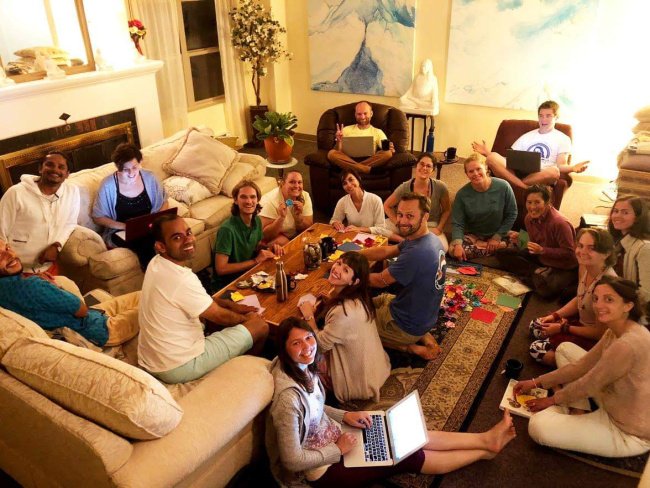
    Today, I live in the Ananda Community in Portland Oregon with my family. This is one of the most beautiful places I’ve had the joy to reside. When you enter from the quiet street, you are greeted by the lush landscapes leading up to home-like apartments, each unique yet harmonious. Smiling faces are often seen, as residents of the fifty units come and go in their daily activities. Many of us eat together on Sundays in the Living Joy Center, many meditate together in our little chapel. We host kirtans on the lawn in summer time and annual work days where we spruce up the community together. And while life continues to do its usual ups and downs, we all know that we are surrounded by a community of souls who care for our highest good. 

    Living in community supports my life in more ways than I can count, but today, I thought to share my top five:

    1. Peaceful vibrations: as soon as I enter the property I can feel the shift. A soft peace and a sweet joy are permeating my surroundings. 
    2. Deeper meditations: when I am here, whether in my home or in the chapel, my meditations are deeper. I believe it is a result of 30+ years of meditators who have come before and uplifted the environment here. 
    3. Spiritual friendships: whether on this path or another, those who live here are all seekers. Friendships here are rooted in this shared search for the Divine and it makes for lifelong bonds.
    4. Joyful service: there is nothing more fun or bonding than cooking a meal together for twenty, or pruning fruit trees together, or painting signs. My family loves workdays so much, we treat them like a national holiday! We toss on our overalls, pull out our gloves and tools, and are nearly always early to the coffee and muffin gathering and prayerful opening circle. 
    5. The long haul: for me, life is about Self-realization, the slow and steady journey toward my truest and highest self. To live among others with a similar purpose helps me remember this when I have become distracted, and be inspired when I need a lift. It’s like my favorite African proverb, “If you want to go fast, go alone. If you want to go far, go together.”  
  • The Custodians of Religion

    The Custodians of Religion

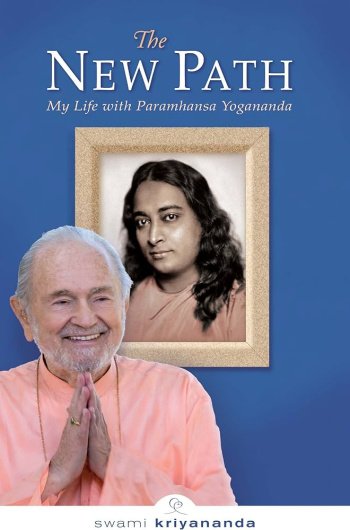
    In my early life lexicon, the term “custodian” referred only to the janitor at my elementary school. Later, in my early adult life, I read perhaps one of the greatest spiritual books ever written, The New Path by Swami Kriyananda. In Part II, Chapter 33: Original Christianity,  the author emphasizes and expounds an important message from Paramhansa Yogananda:

    “The saints alone are the true custodians of religion. For they draw their understanding from the direct experience of truth and of God, and not from superficial reasoning or book learning. The true saints of one religion bow to the divinity manifested everywhere, including of course to the true saints of other religions.”

    I know that I met at least one great saint in Swami Kriyananda himself. He demonstrated in countless ways, large and small, that his consciousness was elevated far beyond the average human state. He drew little attention to this however, as saints often do, and even obscured it at times. The famous French saint Joan of Arc said “If I am not, may God put me there; and if I am, may God so keep me.” Furthermore Swamiji and the saints encourage all of us, as fellow spiritual seekers, to consciously acknowledge, identify with, and develop the saintliness in ourselves and in one another. I remember one occasion Swami referred to all of us as “Saintlets”, or little saints. This has been a helpful practice to me spiritually–to look for and encourage the very best in myself and those around me.

    Find peace within, for that is where your true strength lies.
    –Trailanga Swami

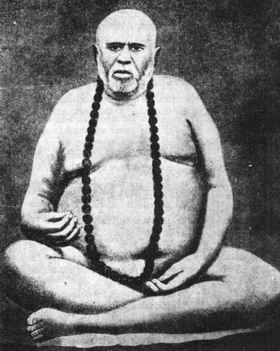
    Generally speaking, saints are rare and mystical beings in our world who manifest some higher consciousness which is innate in everyone and everything. They may take expression in the form of any gender, age, race or religion. Their saintliness may be apparent, obscure or even bewildering. Trailanga Swami was an enormous, always naked, 280-year old saint in India who British soldiers would securely imprison, until he would trans-locate from his cell to stroll on the prison rooftop. Certain religions and churches will designate a saint (or not) as if their acknowledgement is necessary to validate their status, when in fact it is the saints who are responsible for keeping the oft-misguided religions on track! 

    Saints are often inconvenient, and do not necessarily care much for religious customs or norms. The A-List of saints (A for Avatars: fully liberated, enlightened divine incarnations) like Buddha, Krishna, Jesus and Yogananda came–and will always come–to re-establish completely “new religions”, commonly disturbing or dismantling the preceding norms. This upsetting of the religious apple cart is a challenging, sometimes fun, and often painful long-rhythm process of keeping humanity on track morally and spiritually on this planet. St. Francis of Assisi stripped naked in public and renounced wealth in his supreme devotion to God, living in extreme poverty while singing joyful praise of the Lord and His natural world. Soon after, he drastically improved the course of Christianity and the history of the world.

    Lord, make me an instrument of thy peace. Where there is hatred, let me sow love. –St Francis of Assisi

    Of course there can never really be an old or a new religion or God. Jesus said “I have not come to abolish them [the Law or the Prophets] but to fulfill them.” (Matthew 5:17) The saints give a fresh expression to the same truth that God is divine love, peace and joy, shining through the natural world and the virtuous qualities of men and women throughout time. When more and more people realize this, they pray and meditate, sing joyfully and live simply for God and become little saintlets on their way. To this end Paramhansa Yogananda and Swami Kriyananda have given us countless spiritual books, talks, communities, music and so much more to support the elevation of consciousness in this age. Even a fraction of sincere practice and participation in these endeavors yields wonderful results. 

    One of my favorite quotes from Swami Kriyananda reduces it all so beautifully and simply: “I have found the more I think of God, and the less I think of me, the more everything somehow works out. And life becomes a song of joy when you live in this way.