Category: Uncategorized

  • Many Are the Ways

    Many Are the Ways

    “Seek ye first the kingdom of God.” In these few words, Jesus was offering his single most important instruction, promising that “all things” would accrue to such a seeker, things not of this world but better than anything in it.

    That seeker might well ask, “What is the way? Is there only one?” In truth, the ways are many. We know about prayer and meditation. At least we know they’re the first things we’re told to put first…. as are kindness, generosity, unconditional love, compassion, forgiveness, selfless service, renunciation, adherence to dharma, and willingness to answer the call of need where needed. To practice any one of these is to seek first the kingdom of God, as each leads the way to the others.

    “As above, so below,” Swami Kriyananda reminds us, “for that which works best on one level of life is often the best guide to what will work best on every other level. 

    This is beautifully illustrated in a true story about a humble Scottish farmer who was plowing his field when suddenly cries for help shattered the day’s tranquility. Without a second thought, he raced to where someone was obviously in distress. What he found was a child struggling in a swamp, trapped and in fear of drowning. Without hesitation, the farmer, whose name was Fleming, risked his own life to bring the child to safety. 

    The next day, a luxurious car rolled up to farmer Fleming’s modest home, and out stepped a distinguished gentleman, the father of the boy who was saved. The father offered to repay the farmer handsomely for his brave act of rescue, but Fleming refused the offer. “The rescue was my duty,” he said. “Humanity has no price.”

    Just then, the farmer’s own son appeared at the door. The gentleman said, 

    “Then let me at least do this. I will fund your boy’s education at the finest schools, ensuring that he gets the same opportunities as my own son.”

    Gratefully, the farmer accepted the offer, realizing he could never provide his boy such an opportunity himself. The son, whose name was Alexander, excelled in his studies, went on to attend medical school in London, and in 1928 was responsible for one the important breakthroughs in medical history. Alexander Fleming discovered penicillin, a huge advance against various infectious diseases, and for this he was also awarded the Nobel Prize.

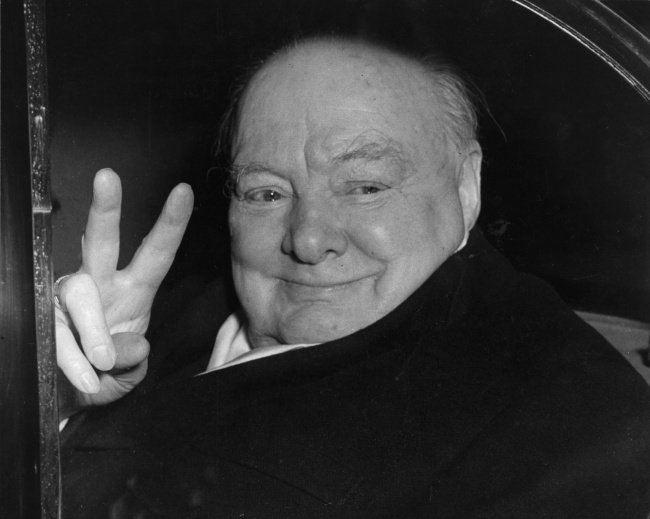
    But here’s where the story comes full circle. Winston Churchill, who would become the British Prime Minister who led his nation through its darkest hours of World War II, once nearly died of pneumonia. Many believe it was penicillin that saved his life. And, even more to the point, Winston Churchill was the boy that farmer Fleming had saved from drowning. 

    First things first. Sometimes it’s an act of courage or kindness that ripples through history, connecting lives in ways we could not imagine. You never know where a selfless act might lead far into the future or even tomorrow. Seek ye first to be as the one who gave this instruction, and all of true worth shall in time be yours.


  • The Altar of the New Year

    The Altar of the New Year

    The sun has now set on 2025, and the horizons of 2026 are opening bright and broad before us. It is not for us to know what the coming year will bring—personally, spiritually, materially, or globally. Truly great blessings are coming, without any doubt, as are many difficult trials and challenges. Our part is to reflect thoughtfully on what has come to pass, and to renew our spiritual efforts with courage and strength for what is to come. In the all important words of Sri Yukteswar “everything in future will improve if you are making a spiritual effort now.” This offering on the altar of the new year will bring the grace of God, with joy and blessings, to us all.

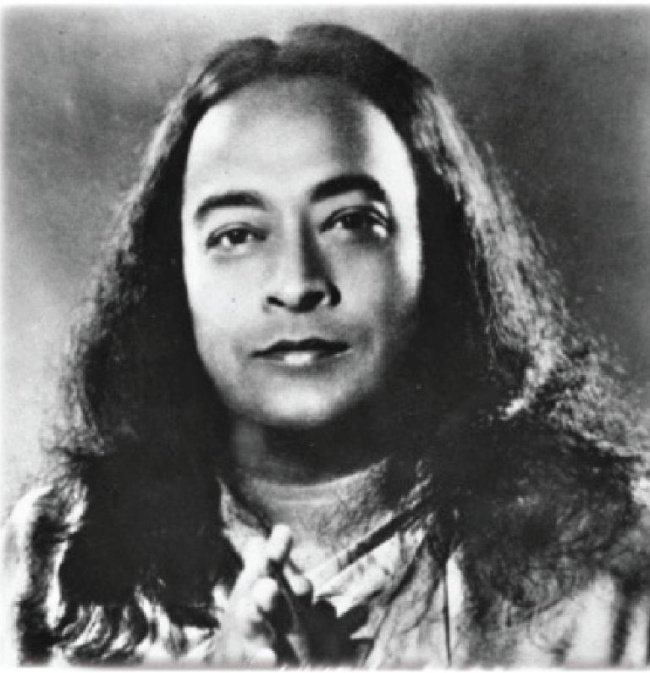
    Paramhansa Yogananda encouraged all spiritual seekers to use the transition of the new year as an opportunity to rededicate our efforts to “win” the search for God through the vigorous use of will power, and through the divine grace of our Gurus and God. In January 1938, he wrote to students and friends:

    “Let us make up our minds that we will win, focusing all our concentration on ceaseless efforts to succeed in the New Year, and we will surely be victorious.”

    How can we afford to maintain anything less than cheerful optimism in the new year? God is sat-chit-ananda—existence, consciousness, bliss—and the latter Yogananda qualified as ever-new bliss or joy. Yogananda said that “trying to seek happiness outside ourselves is like trying to lasso a cloud,” but that “your soul, being the reflection of the ever-joyous Spirit, is happiness itself.” Then let us seek and live in the happiness of the soul.

    The winds of change are blowing many cross-currents of global events, personal karmas, and life circumstances hither and thither. Like an ancient, steadfast oak tree in the wind, however, the one great purpose of life is forever and only to find God. Every lesser purpose is fulfilled with joy and meaning in that grand design. Let us re-dedicate our efforts in meditation, devotion, joyful service, and maintain an ever-positive outlook on whatever comes our way.

    With the coming of the new year we also celebrate the January 5 birthday of Paramhansa Yogananda with millions of devotees around the world. This, too, is a celebration of Spirit and ever-new joy. The message and blessings of the Master are as vital and present as ever. Our own lives are immeasurably blessed by our attunement to Yogananda, and the world turns on its axis by the same power of God that flows through Christ, Babaji, and our Masters, who bless and watch over it.

    May the altar of the new year be richly decorated with our love for God, our fellowship and satsang with devotees, and our dedicated efforts to seek and serve God and Guru. As we keep the candles of hope and love burning, our hearts will be filled with that ever-new joy of God and the blessings of all that is to come.

    “The New Year has come to greet you…with new hopes, new determination, new will-to-achieve, new activities. In the Temple of the New Year renew your reverence for the unlimited hidden power of God within you.” —Paramhansa Yogananda

  • Christmas Through Yogananda’s Eyes

    Christmas Through Yogananda’s Eyes

    “From today until Christmas pray deep and long until every day becomes a true Christmas day of Christ-communion.” – Paramhansa Yogananda

    Christmas is many people’s “favorite time of the year,” and disciples of Yogananda are no exception. Even as we string lights and garlands in celebration, nature itself calls us inward. The leaves fall, the air grows still and cold, and plants retreat to the warmth of the earth. So too are yogis invited to garland their altars and withdraw into the inner silence.

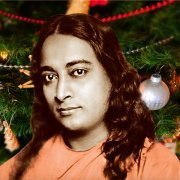
    Yogananda loved Christmas. He embraced what he called “social Christmas” as a time to share gifts, feast, and enjoy his large spiritual family. There are countless stories of the care that the Master put into the selection of gifts for his disciples at social Christmas. He would shop months in advance to find just the right thing. 

    On one Christmas night, Yogananda handed his disciple Mr. Dickinson a square box by the Christmas tree. As Mr. Dickinson opened it, he experienced a dazzling flash of inner light. Forty-three  years before that fateful night, another yogi-saint, Swami Vivekananda had told Mr. Dickinson that his Guru would make himself known with the gift of a silver cup. Even as Mr. Dickinson dedicated years of loving service to his guru Yogananda, no such cup had been gifted until that fateful night. 

    But for Yogananda, “spiritual Christmas” was even more meaningful than the outward festivities. On December 23rd, one day before the social celebrations, he would gather his disciples for an all-day meditation. Stories of his bliss on this day abound. Again and again he would slip into Samadhi, uplifted in divine communion in the presence of hundreds. Near the end of the meditation he often played The Blue Danube, explaining that its joy mirrors the celebration of the Masters and angels when so many souls unite in deep meditation. They dance for joy! 

    The All Day Meditation, 8 hours of inner communion, has continued as a spiritual tradition of Self-realization seekers around the world. Thousands gather together in temples and homes to meditate for one full day each year. Here at Ananda Portland, we gather for this sacred event on the Saturday before Christmas, which lands this year on December 20th. 

    Eight hours of meditation can be intimidating. But, asanyone who has tried it  can attest, there is a grace about this meditation that makes it different from any other. It feels, for just one day, that all the world is going inward and the soul rejoices in the silence. Newcomers often find comfort in the periodic chanting and stretching breaks, offered every one to two hours, which help the body adjust to the long periods of quiet.

    Yogananda urged us: “Let us make this Christmas a real celebration of the birth of the holy child by striving to realize the consciousness which He attained.”

    I hope you can join Ananda for some or all of this sacred celebration of Christ consciousness!

  • Yogananda India Pilgrimage #2

    Yogananda India Pilgrimage #2

    A mild typhoon preceded our arrival in Puri via the Bhubaneshwar airport in the state of Odisha. The humidity and occasional downpour was a welcome change in weather for most pilgrims, and the seaside accommodations enjoyable for everyone. We stopped for another delicious lunch en route to our classy beachside hotel, the Mayfair. 

    Although our pilgrimage to places of great spiritual power continued, the general distinction between the teeming city of Varanasi and our relaxing beachside resort in Puri was a stark contrast: we arrived at the Mayfair with a big collective “relax and feel” breath. 

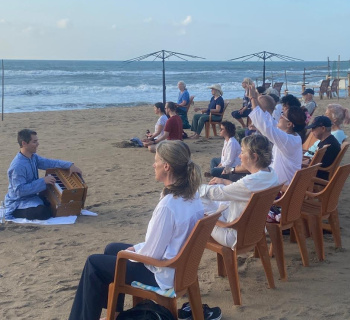
    Visiting the Karar Ashram of Sri Yukteswar is the spiritual highlight for the Yogananda devotee in Puri, however it is a city of great spiritual power and rich with the history of many yogi-saints and great devotion. Our glorious morning routine included sunrise energization, a bit of yoga/pranayam, chanting and meditation on the beach. Morning visits to pilgrimage sites gave way to free time in the afternoon for more yoga, relaxation, spa and gym time etc. The food was over-the-top and many pilgrims may have over-indulged in that department!
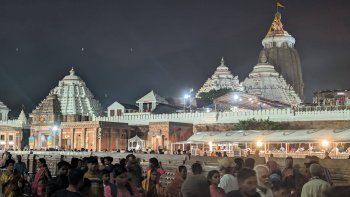
    Other highlights in Puri included a visit to the enormous Jagannath temple. Although foreigners are not permitted inside, we circumambulated the temple complex to our great enjoyment and amusement. Over 10,000 priests serve here and up to a thousand cooks can serve upwards of 50,000 meals here daily! Jagannath is a form of Lord Krishna who is an incarnation of Vishnu, more recently incarnating as Mahavatar Babaji in our line of Gurus. Ultimately all is the One Spirit, but this special deity has tremendous spiritual power and millions upon millions of devotees come here to worship each year.
    From Puri we made our way to Kolkata, my personal favorite place of pilgrimage. Besides being the home of our guru Paramhansa Yogananda, it has an especially unique cultural and spiritual environment. Through the centuries this area and city in West Bengal has been home to many saints, enlightened scholars, scientists, authors and sages. Yogananda’s own childhood stories in Autobiography of a Yogi are rich with many such mahatmas, or great souls, with colorful and fascinating context for the making of the great world Master that Yogananda would become.

    The undeniable highlight for every Yogananda devotee here is the busy little neighborhood in which the great guru’s ancestral home, and that of his boyhood spiritual friend Tulsi Bose, sit just a half a kilometer apart. Both locations are supermagnets for countless streams of devotees who come seeking the blessings of prayer, meditation and reverence where Yogananda and many other great saints experienced the samadhi of enlightened oneness with God.
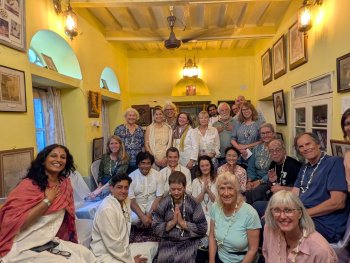
    An unlikely meeting came together at our Kolkata hotel one evening when, with a little coordination, we were able to bring together three coinciding devotee groups: pilgrims from Ananda LA and Ananda Village, our pilgrims from Ananda WA and Ananda Portland, and several of the local devotees connected to our Ananda Kolkata center. We sang chants in Bengali, Hindi and English together, and felt tremendous inspiration at the spontaneous, international group of devotional hearts joining together. Murali and I shared about the work of Paramhansa Yogananda both as a personal and universal avatar for this age, and a Sat Guru of divine love, joy and wisdom. And off course a large and boisterous feast of joy and Indian food followed as our brief and delightful encounter with these international friends and gurubais came to a close.

    Our final major pilgrimage stop in Kolkata sits across the Ganges river: the famous Dakshineshwar Kali temple where the spiritual powerhouse Sri Ramikrishna resided and worshipped for some 40 years. A fascinating feature of Ramakrishna’s life was the samadhi or oneness with God he sought by mystically delving deep into the major religious traditions of the world including Hinduism, Islam, Christianity and others. Although his realization of God ultimately transcended all forms, he long preferred to worship Divine Mother in the form of the goddess Kali and would ecstatically interact with her living presence. Years later Yogananda visited and also directly experienced the presence of the Divine Mother here. My own experience of visiting traditional Hindu temples, especially with such mystical power and history as Dakshineswar, is that the pilgrim or seeker can tap into the spiritual power there tangibly with focused attention before, during and after the ceremonial visit among throngs of people worshipping and seeking the blessing of darshan from the presiding deity.

    Our final leg of the pilgrimage brought us to the Ranikhet region of the scenic Himalayan foothills, but not before a brief stop back in Delhi to regroup, see a few pilgrims off and gain a few more, and set off for a very long day of travel aboard train and bus. Leaving the poison air and pandemonium of the Delhi railway station behind we made our way some 5 hours to Kathgodam by rail, to board our bus and ascend another 6-7 hours up winding mountain roads. Many hours of devotional chanting and a spontaneous choir group filled our bus as we at last arrived at our final accommodations: the illustrious Dunagiri Retreat. This magical place sits just a few kilometers from our primary place of pilgrimage here, the sacred Babaji’s cave where Lahiri Mahashay was reunited with the deathless guru in 1862 and Kriya Yoga was reborn for millions of spiritual seekers in this era.

    The fresh and frigid mountain air was a marvelous change, and the stunning views, sunsets and grounds of Dunagiri a feast of beauty for the eyes and heart. The food too (yes, the food again!) proved to be the most wholesome and enjoyable of our many wonderful places of nourishment, with many fresh, homegrown and local vegetables and traditional homemade hearty dishes. The proprietor was a splendid host and immediate friend to all, a kriya yogi of Yogananda and Babaji himself, who also worked at the World Bank in the USA for some 15 years before starting the humble Dunagiri retreat grounds 20 years ago. A daily toil of labor and love has made it the beautiful sanctuary it is now, including a Babaji meditation temple, spacious yoga hall, large and gorgeous atrium dining hall, sprawling terraced landscape and flower gardens, and comfortable if rustic accommodations.
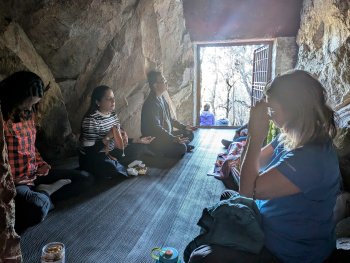
    Two consecutive mornings we hiked up to Babaji’s cave to meditate for hours within and along the beautiful hillside nearby. Our hiking was mostly in silence, practicing japa and devotional chanting to drink in the beauty of God in nature and the special blessings of the immortal Babaji. Many pilgrims experience profound meditation and spiritual communion here.

    Finally we visited a nearby temple atop another towering hill, of the same name, Dunagiri, as our retreat. Legend says this special temple was also a meeting site of Babaji and his chief disciple Lahiri Mahashaya, as well as another ancient and sacred site of the Divine Mother in the small temple itself. Visiting these beautiful and powerful sites for just one or two hours, although remarkably special, would sometimes leave pilgrims pining to spend hours longer in devotional silence and meditation there.
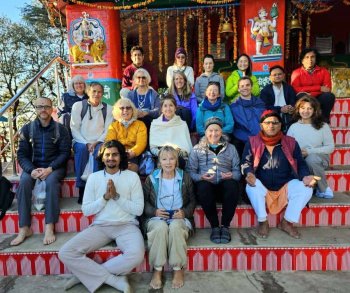
    We finished our time at Dunagiri with a fire ceremony in the special Babaji temple, chanting the ancient Mahamritunjaya Mantra 36 times with deep concentration, prayer and blessings filling our hearts. It was hard to leave and the bittersweet feelings continued as we retraced our route by bus and train back to Delhi for our closing satsang together. The blessings of this pilgrimage were so potently felt by everyone present. 

    Spiritual friendships and experiences were forged deeply in all hearts, and renewed inspiration and divine strength continues to blow like a mighty wind at the backs of all our pilgrims. Parting ways with our 20-day journey and one another proved hard on everyone, but the overwhelming feelings of gratitude, joy and blessings are the wings each pilgrim felt soaring their ways home. As a result, a rare spiritual gift like a precious gemstone now adorns each of our hearts forever.


  • Yogananda India Pilgrimage #1

    Yogananda India Pilgrimage #1

    A fiery floating lantern and popping fireworks adorn the cacophonous festival of thousands worshipping the goddess Ganga nearby. Smoky skies preside over the placid gray Ganges River this evening atop the River Rhythm Hotel—only footsteps from a stretch of holy-beyond-holy land. Few places on earth carry a spiritual power so ancient and immense.

    Rewind five days: the bulk of our 24 pilgrims from (mostly from Ananda Portland & Ananda Washington) landed in Delhi for the start of our Yogananda India Pilgrimage—three weeks in four segments, visiting extraordinary historical and spiritual places that hold special meaning for devotees of Self-Realization and disciples of Paramhansa Yogananda and our line of Gurus. Our Ananda Center in Delhi provided the perfect home base: a restful day to adjust our bodies and minds to India, to enjoy spiritual friendships, nourishing food, and an opening ceremony to set our intentions and deepen our connections for the journey ahead.

    Pilgrims at sacred Sarnath

    A domestic flight to Varanasi introduced us to the cultural adventure of travel within India: friendly, disorganized, and mostly pleasant transitions from place to place. A friend and gurubhai from South India met us at the airport with smiles to serve as our local guide and fixer. A comfortable one-hour bus ride with a delicious meal (a constant throughout our days!) brought us to Sarnath, a sacred site of Buddhism rich with archaeological treasures, spiritual history and power. Here the enlightened master Buddha delivered his first sermon.

    Our pilgrimage is unique in that we seek to tune into the living presence of saints and Masters whose vibration remains at these holy sites, for those receptive souls who seek it. A lovely walk and guided tour ended with a brief meditation beneath a descendant of the Bodhi Tree, whose ancestor sheltered Prince Siddhartha before he emerged the illumined Buddha. Another short drive brought us to our River Rhythm Hotel in the heart of Varanasi, where a restful night gave way to an early morning.

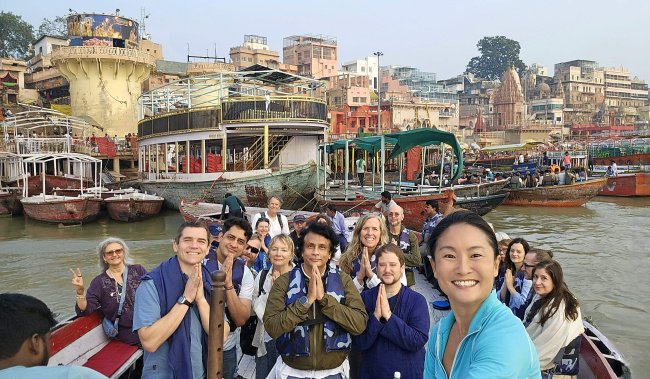
    Morning boat ride on the Ganges

    For two days, sunrise boat rides along the sacred Ganges brought us to special places for meditation and devotion. Varanasi is more peaceful by boat—removed from the teeming chaos of traffic and crowds. Docking and ascending the steep ghats (riverside embankments used for worship and daily life) leads into narrow lanes lined with ancient temples, ashrams, and colorful shops, side-by-side with humble homes and every shade of human existence.

    People are everywhere—thousands upon thousands—busy living their lives. Beneath the craziness, especially in a supernally sacred city like Varanasi, most people seem fundamentally peaceful, happy, and kind. Many visitors and locals flow in a constant stream of devotion and worship that has continued here unbroken for many hundreds of years.

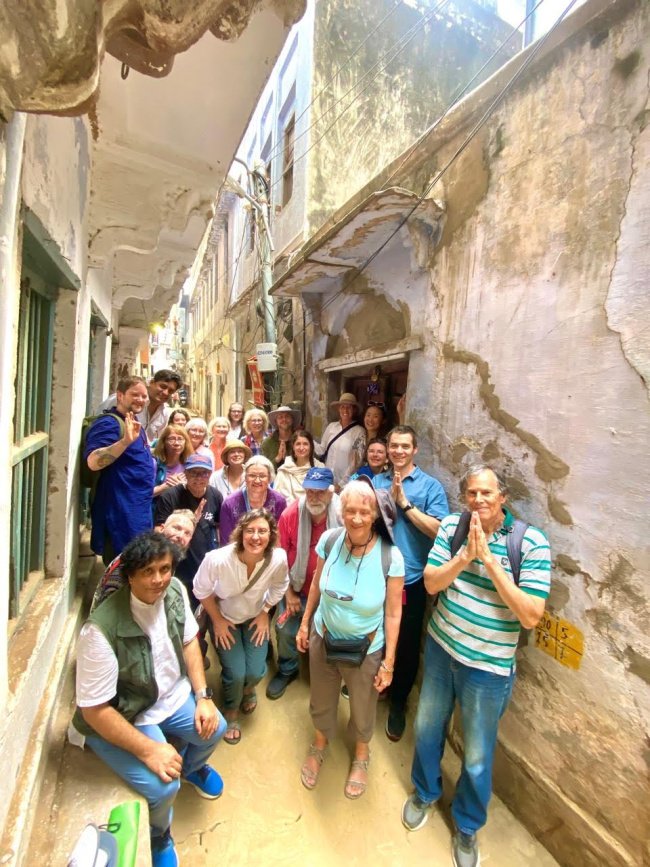
    Pilgrims visiting Lahiri Mahasaya’s home

    It was in the nearby Bengali district here in Varanasi where a sixteen-year-old Mukunda (Paramhansa Yogananda) first met his Guru, Sri Yukteswar. Their hearts melted in a divine reunion of eternal Guru-disciple bond. They walked together to a nearby residence, where Sri Yukteswar was visiting his mother, and spent hours conversing and meditating. My friend and co-leader, Murali Venkatrao, has been carefully researching details of Yogananda’s life while writing a manuscript for an Autobiography of a Yogi mini-series in development. He was able to confirm with high confidence that room 205 in the now Dwivedi Hotel is that sacred site of that first meeting. Our pilgrims were blessed to be the first group from Ananda to visit and meditate in this special place. Because we had booked the room, I seized the opportunity to stay overnight and meditate extra hours there!

    The next day we visited the ashram of Trailanga Swami—a contemporary saint of Lahiri Mahasaya—renowned for his miracles and towering spiritual greatness. Later, with a smaller group, we explored the Durga Mandir, built by the maharani of Varanasi in the 18th century—practically new by Indian standards! We enjoyed a nearby meal fit for royalty and later joined the arati worship of Hanuman (and thereby Lord Rama) at another local temple—Jai Sita Ram! Jai Hanuman! On the way, our adventurous group tried meetha paan, a sweet betel leaf filled with rose petal jam, fennel seeds, dried fruits, and coconut—WOW! A wild ride for the palate and mind.

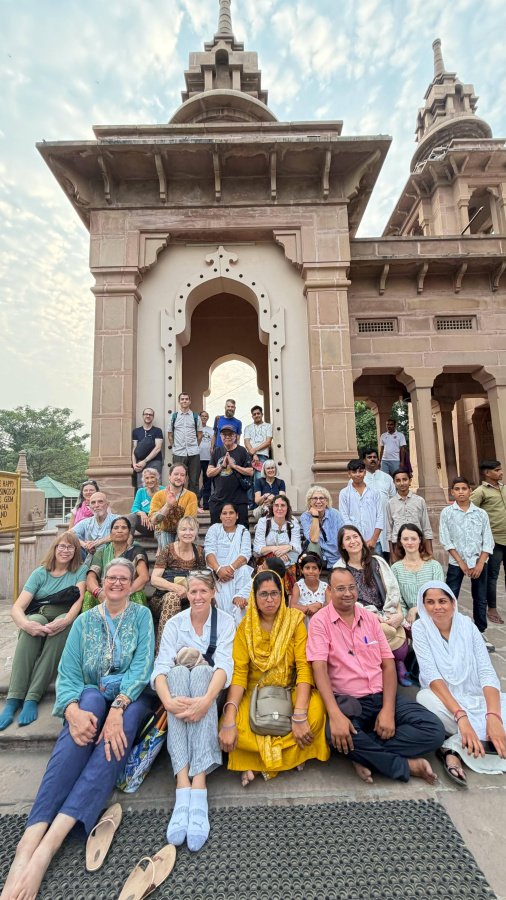
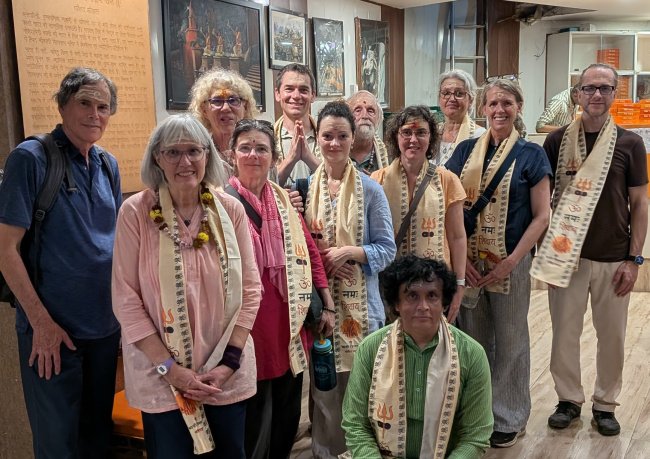
    Pilgrims at Durga Mandir

    That evening, we returned to the Ganges for a boat ride to witness the world-famous arati at Dashashwamedh Ghat. This is where Babaji met other great Masters and promised to remain in his physical form forever. Countless saints and Masters have hallowed this riverbank for centuries, most likely millenia. The daily arati continues without fail—its devotion still strong, despite huge crowds, bright LED screens, and a more recent and distinct Bollywood edge.

    Evening arati at Dashashwamedh Ghat

    Later an unexpected devotional festival brought a night of endless fireworks, drums, crowds, and clamor. Sleepless after 2 a.m., I went to the roof to energize and meditate. Hundreds of fireworks lit the sky and riverbanks for miles all through the night, while I chanted to Divine Mother. I could feel Spirit celebrating all night long through the hubub—rejoicing in life’s glory, variety, and sometimes wild chaos.

    Our final day in Varanasi brought us to the ashram of Anandamayee Ma, the bliss-permeated Mother saint also described in Autobiography of a Yogi. Our chanting and meditation there were joyful and deep, with a tangible presence of her vast spiritual love. In the afternoon we made a ceremonial visit to the extraordinary Kashi Vishwanath Temple—a sacred and powerful shrine of Lord Shiva, destroyer, transformer, and maha yogi aspect of God.

    Pilgrims at Kashi Vishwanath Temple

    Next, we travel south to Puri in the state of Odisha for a more relaxed pace along the Bay of Bengal, with more time for yoga and pranayama. Stay tuned for Yogananda India Pilgrimage #2! Sending many prayers and blessings to all.

  • The War in Portland

    The War in Portland

    Our humble and beautiful city of Portland, Oregon, is once again making national news with politics and controversy in the headlines. The state military has been federalized, and protestors are taking to the streets—yes, in chicken costumes, clown makeup, and more (after all, it is Portland)—to exercise their rights.

    This is not to make light of current events, the horrors of real war, or the many difficult issues and concerns facing our government and society today. It is, rather, to frame the inner war of Light versus Darkness taking place not in Portland or Washington, but in the human heart. The outer conflicts and wars of this world are reflections of that inner struggle, and resolution must come from each heart seeking that “peace which passeth all understanding” (Philippians 4:7).

    There are many harmful weapons, words, and strategies causing great suffering in the outer world. Most of us are ill-equipped to respond in a meaningful or effective way outwardly, but would do well to follow the heart in the path of right action described by Krishna in the Bhagavad Gita:

    “It is better to die while trying to accomplish one’s own duty than to settle for another’s [though safer and easier], which course is filled with danger and uncertainty.” (3:35)

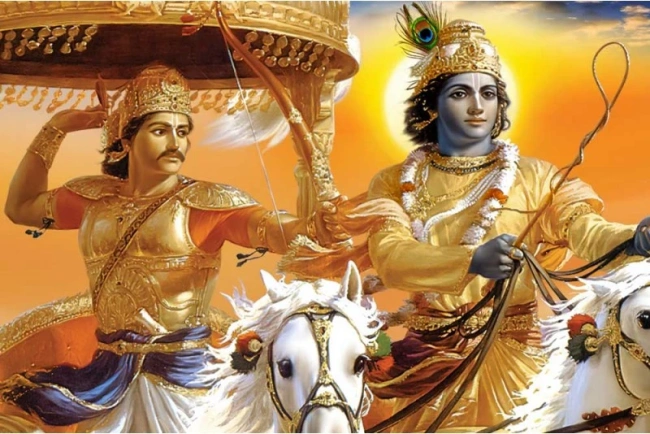
    The real battle must be fought on the level of consciousness, where its origins lie: “Arise, O Arjuna! Take up your bow of discrimination and fight the inner battle!”

    Paramhansa Yogananda’s own counsel to the yogi in battle is:

    “Be calmly active and actively calm.”

    This simple statement offers the profound key to victory. Daily meditation, spiritual discrimination, and intuition form the troops of our will and feelings into battle formation. Far greater than bombs or guns, the weapons of compassion and love wield a power infinitely stronger in this world. The little figure of Mahatma (Great Soul) Gandhi emanated greater power and peace than most kings, warriors and politicians down through history.

    The chaos, division, and pain we are witnessing around us mirror the collective consciousness of the people within it. When the light of our spiritual power burns brightly, the world around us is filled with greater hope and harmony. To heal the pain and suffering in Portland, in the United States, in Palestine, Ukraine, and throughout the world, we must first heal the souls of people everywhere.

    The power to change oneself through yoga, the power of prayer, and the grace of great Masters and Saints move divine currents across this world. Ocean waves may ebb and flow, heave and subside, but the silent depths contain the ocean’s real power. Every soul attuned to the ocean of Spirit has the power to bring divine peace and harmony to the world.

    Portland is not at war—but there is a war raging in our consciousness. Let us fight that battle on the front lines of our hearts and minds, that we may win victory in the soul.

    Each one has to win his own victory. Make up your mind that you are going to be supremely victorious. You don’t need an army or money or any other material help to gain the highest victory attainable; just a strong determination that you are going to win. All you have to do is sit still in meditation, and with the sword of discrimination cut off, one by one, the advance of restless thoughts. When they will all be dead, God’s kingdom of calm wisdom will be yours.         –Paramhansa Yogananda

  • But WHY?!

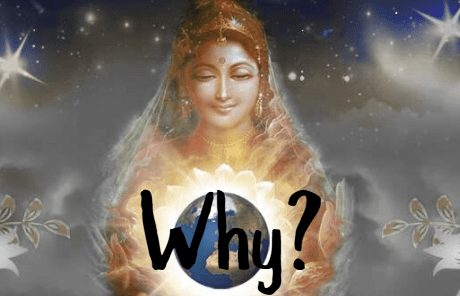
    But WHY?!

    Recently while I was coming to grips with the difficult situation facing our community, I was trying to understand things better by talking to a long-time resident. I slowly started to ask her “Why…” then paused to properly formulate my question, to which she responded “Ahh yes, the best kind of question.” And in that moment I had a profound realization of the contrast between how often I’m asking God that question and how often my understanding of the answer actually helps me.    In school I was taught that when you’re writing a factual paper, it’s important to always include the 5 W’s: Who, What, Where, When, and Why. Now, the first 4 W’s in that process are the easy ones, like putting stats on the back of a baseball card. But when you get to the 5th word, “Why,” everything suddenly seems to become a bit more complicated. Now WHY is that??

    For me, it helps to remember that we are God’s children. But not in the sense of perfectly well-mannered little cherubs silently sitting in church with folded hands; but instead more like Lord of the Flies, where we’re essentially left to our own devices and chaos often rules the day. 

    Having children myself, I often hear that wonderful “Why?” for a variety of reasons. Most days it’s asked around the topic of bedtime, as in “WHY do I have to brush my teeth?” even though they’ve brushed teeth at every bedtime since they can remember. Or almost always when the timer for screen-time goes off, I will hear “WHY do I have to turn the screen off?”

    Yet how often do people cry out in anguish that exact same question when a loved one dies, or after a big loss? Just like children, as if we didn’t know the timer of life was set, and going to run out at some point sooner than we’d like, we resist what’s happening and try to “reason” with God.

    My dear children will also ask me “why” questions that give me the immediate urge to say “Because I said so!” yet always require further explanation. “Why do I need to go to bed?” or “Why do I need to brush my teeth?” are questions that any mature adult could readily answer, yet children don’t have the foresight or maturity to understand the consequences of their own actions, and thus questions such as these are incomprehensible to them. So telling them “you’ll understand when you’re older” is entirely unsatisfying to them. 

    In the final analysis, are we really any different? Just because our questions are more complex, or seemingly unanswerable, doesn’t mean that a bit more spiritual maturity, experience, or foresight will help us understand what seems incomprehensible. Yet it’s all too easy to dwell on these questions, and to take the lack of a satisfying answer as the absence of one. 

    So recently I’ve started to act a little bit more like I would love my children to act: in perfect faith in the wisdom of their father. After all, God has already shown me enough to know that I don’t know everything, or really anything for that matter. And when I put my faith in Him, I immediately feel better about everything.    Then, looking back on all the times I had faith,  versus all the times I doubted, the pattern makes a strong case for more faith going forward, because whatever has happened has always worked out for the best, and time has solved almost all of my confusion from those experiences.    I also realized that when I want to say to my children “because I said so,” I could just as easily say “because I love you,” for the simple reason that everything I do for them, pleasant and unpleasant, comes from a place of love.    Now with new confusion over new experiences, do I really imagine things will be any different? Perhaps this time around, when the voices in my head cry out “But WHY?!” I’ll look up at my Divine Mother and Heavenly Father and, just to try something new, say “because God loves me and wants me to be free, and that’s good enough for now.”
  • Life Is a Stream Dream

    Life Is a Stream Dream

    One of the oldest pieces of American music, which is still sung today, is a simple little
    ditty that every American child learns. It is actually a nursery rhyme that was written in
    the 1850s and was later put to music. If you grew up in the USA, it is one of those songs
    you never forget, even if not having sung it for fifty years.

    Row, row, row your boat,
    Gently down the stream,
    Merrily, merrily, merrily, merrily,
    Life is but a dream.

    You’re probably singing it to yourself right now. The melody and lyrics are light and
    cheerful, seemingly of no significance except for the smiles they invite. But I wonder
    how many of the millions of us who have sung this song have tuned into its profound
    counsel. There is not a wasted word in the whole eighteen. Even those that repeat,
    repeat for a reason.

    “Row, row, row your boat.” Give yourself energetically in body, mind and soul to your
    duties, relationships and responsibilities, and especially to your spiritual life. Rowing
    your boat is devoting yourself to your highest potential.

    “Gently down the stream.” But row relaxed. Enjoy the experience. Steer your course to
    stay in the natural flow of it. Be attentive, attuned and at ease, never tense or resistant.
    “Merrily, merrily, merrily, merrily.” The repetition of this one word is intended to drive it
    deep into the singer’s subconscious mind. We’re affirming a positive outlook, prompting
    ourselves to look for the opportunity and joy in whatever comes our way. Happiness is a
    choice, and we can choose it even in the most difficult situations. Be merry, and you will
    be streaming with a lighter stroke instead of rowing against it in a sweat.

    “Life is but a dream.” It’s a banner line to remind us that nothing sensory, nothing that
    calls us ashore to seek our happiness there, is anything but a bubble that is bound to
    burst. The lure of life beyond the stream – beyond the flow of energy in the astral spine
    – is baited with false promises that are certain to disappoint.

    We are in this dream to meet and merge with the Dreamer, to row with loving care to the
    welcoming Sea of Bliss. Merrily, merrily, merrily, merrily makes it the dream it is meant
    to be.

  • Eyes on the Prize

    Eyes on the Prize

    We live in a world that celebrates multi-tasking. Getting hired for any management position seems to make this a priority skill. The presumption is that it facilitates productivity.


    As any parent or teacher of small children knows very well, situations often arise that interrupt one’s focus. But is multi-tasking an optimal design for attentive living, for managing stress, for achieving success? Consider the creativity, inspirational impact and enormous body of work of Swami Kriyananda – his music, books, lectures, whole communities – all brought to life with total focus, one undertaking at a time.  

    Can you multi-task while meditating? It curses the intended effect. Concentration and stillness flee the scene.


    An axiom often repeated by Paramhansa Yogananda is another key to success: “The greater the will, the greater the flow of energy; and the greater the flow of energy, the greater the magnetism.” Whatever you want, you have to act with commitment, confidence and courage. The weaker the will, the weaker… You get it.


    Another secret of success is self-study. What is it that you want? If you have failed to achieve it, why? Yogananda would constantly remind his disciples, “The season of failure is the best time for sowing seeds of success.” Get back on that horse, but with a clear understanding of what will keep you from being thrown again. Too often we approach a challenge with the same mindset that didn’t work the first time or the second or…. Stop! It’s time to rethink what you thought.


    With humor and truth, probably from an old Reader’s Digest, a one-liner claimed that when you want to get somewhere, you have to know three things: where you came from, where you are going, and where you left your keys. 


    Ultimately, of course, the vehicle is oneself, the destination is Self-realization, and the keys are the principles that comprise a dharmic life. But in our multi-task society, even with the best intention, help is needed to keep us from driving in materialistic circles, unable to locate the exit ramp. I, like many, once believed that I could find it on my own. I wasn’t ready for the true Guru to appear.


    Worldly goals need not be at the expense of spiritual gain. They can, indeed, serve a higher purpose than personal ambition and self-indulgence, thereby serving also to invite the Guru’s appearance. The question then is who is given the lead, you or the Guru? “Open your heart to me,” the Guru says, “and I will enter and take charge of your life.” Are you ready for that too? How quickly do you want to reach where the Guru wants to take you? How willing is your will to let go of what’s in the way?


    The Guru is an emissary of God. It is God’s guidance that is offered, along with God’s infinite abundance. Success in this world, no matter how great, vanishes the moment we die. The multi-tasker is instantly redirected to a whole new dimension of focus where that skill is of no use. Better to seek the true success of achieving our soul’s freedom. Eyes on the prize.

  • The Power of Aum

    The Power of Aum

    Aum Christ, Amen; Aum Christ Aum. Aum Christ, Amen, Aum Christ Aum.

    Festival of Light blessing song by Swami Kriyananda

    It was 2004 and my life was busy and full. I had a great job as a Tech Support manager, I sang in the choir, practiced Aikido 5-6 days a week and enjoyed all the Ananda events. Life was good and fun!

    Then my doctor ordered a routine mammogram and when the results came back it showed spots of calcification in my right breast tissue. This had never happened to me before. Because of this change in my test results my physician recommended that I schedule a biopsy. She advised me to see a particular surgeon in the downtown Portland area, so I made an appointment but could not get in to see the surgeon for several weeks. 

    In the meantime, my mind was actively presenting to me all kinds of “what if” scenarios! It wouldn’t shut up! What if the biopsy shows cancer? What if you can’t take care of yourself? What if there are other problems they find? What if, what if, what if! Believe me, you can’t stop a mind that is chugging down the train tracks like this. 

    But I knew from my spiritual practices that this was the time to turn things up a notch. Since I’d found the practices of Mantra and Japa to be super helpful in other situations, I tried out a few Sanskrit healing mantras to see what might work.

    Interestingly the mantra I found that generated the most calmness was the Aum Christ, Amen chant that we sing every Sunday in the Festival of Light. So, I started chanting it out loud when alone and mentally when I was with others. I kept that chant going in my mind from the time I woke up until I went to sleep at night. If I woke in the middle of the night, it was repeating, and if it had stopped, I started it again. I clung to that mantra like a drowning person to a life preserver. 

    A couple weeks later while driving to the surgeon’s office I continued singing the chant. It was so powerful that when I walked into the doctor’s office and was greeted by the receptionist, she looked up at me with astonishment and asked: “How tall are you anyway?” I truly felt tall and invincible! I suspect that she was seeing the light of my aura boosted by the changes from the mantra. I looked (and felt) like a large powerful being.

    When I got into the room with the surgeon I peppered her with questions. She was kind and very forthright. We managed to get through a quick exam and all my questions. She looked at my mammogram with me. She examined all the little spots on the film and pointed out the unique shape of the spots. She said that “cupping” is the word they use to describe this shape. In her experience when she would see cupping on a mammogram invariably it turned out to be nothing to be concerned with. But she still wanted me to have the biopsy.

    At that moment something in me released! I knew that nothing was wrong. I knew they would not find any evidence of cancer in the biopsy and then left her office.

    I drove from her office directly to the Aikido dojo. As I drove, I noticed that the weather had turned very unusual. The clouds had gathered together as if they were going to leap over Beaverton and dump a load of water. And the light turned a strange orange color. I’d never seen anything like those cloud formations. They were roiling and rolling in very strange ways. And they were talking to one another. I could hear them! Not in words but they were definitely communicating with each other and me. What an amazing state of consciousness that chant generated. 

    Of course, I still had several weeks to go before the biopsy would be done. So, I kept repeating the chant day and night. And as you might expect from the story above, the biopsy revealed there was no problem. Whew!

    Since then, I’ve discovered that the Aum Christ, Amen chant is even more useful. Have you ever walked out of a store with an ear worm* going through your mind? It might be something like “She loves you yah, yah, yah!” or some other song that kind of bugs you and refuses to go away. Just start chanting Aum Christ, Amen and it will banish the ear worm back to where it came. 

    Swamiji discusses the concept of “Aum Christ Amen” in his teachings. He highlights that Aum is the great sound behind all manifested creation, which remains constant even if all other sounds disappear. He describes it as the faithful and true witness, akin to hearing the motor of a car, indicating the divine power at work in the universe.

    I can personally attest that continuously chanting Aum Christ, Amen will bring you inner strength, uplift your consciousness and grant you calmness so you can face any situation with joy. Give it a try sometime.

    Joy and Calmness to you!

    Saranya