Category: Uncategorized

  • It’s Complicated. Or Maybe Not.

    It’s Complicated. Or Maybe Not.

    Our skills are many, which we acquire over time with dedicated study and practice. These are generally useful to us and others, but among the ones we are especially good at, unfortunately, is the setting of traps for ourselves in the judgments we make. 

    The question of how much we like or dislike a person, object, feeling, experience or idea, is certain to color our reaction as it unfolds. Our judgments can be as mundane as an attitude about a Paris fashion or as serious as a matter of dire concern. The result is either pleasing or it isn’t.

    Westerners in particular, it seems, tend to see in black or white. A person not viewed as a winner, for instance, is apt to be branded a loser. Or at least as someone worthy of little interest. 

    Likewise, we obsess over good and bad, subconsciously guided to one label or the other, affixing it here and there automatically. Simple issues of personal taste can quickly turn a dialogue into a feud. We have different ideas about everything under the sun. Is it any wonder these days that complication and polarization prevail?

    As a further complication, our certainties are not always certain. Think about how we think of war and peace. When we are not at war, are we at peace? Hardly. War and peace exist as relative values on the wheel personal experience. The fabric of our lives is woven of both. 

    Love is another virtue that is often misrepresented. So much gets confused with emotion. It is said that every human act is either an expression of love or a cry for help. Where emotion runs deep, however, even a so-called act of love is tinged with insecurity as well. 

    And although we are loathe to admit it, romantic love is transient, a form of emotional attachment. Its passion is bound to diminish. Complication, over time, tends to encumber even our most ardent relationships. Love of God and the grandeur of God’s creation is the only love that is ever truly expansive, for it alone is unaffected by circumstance, condition or result. It alone is free of personal motive.

    But is love of God a practical response to the whirl of our daily lives. Does it make sense to accept, without judgment, whatever comes our way? St. Francis gave thanks for all he received, no matter how meager or rude, as exactly what God had in mind for his spiritual growth. Was he just a good-hearted fool?

    I doubt there is anything more difficult than letting go of one’s emotional investments, living without attachment to the outcome of our endeavors, and learning to surrender our likes and dislikes for the sake of our higher welfare. Yet, how else can we escape the sway of our fears? What chance do we have of that if we continue to give a thumbs up or down to every person, item and event that enters our field of awareness? 

    As duality ordains, every plus requires a canceling minus. Like night and day, every want must include its twin, whether in actual occurrence or the apprehension of same.

    Of all the options we face, there is really but one that matters. Either we roll our emotional investments into a more refined portfolio of divine stocks and bonds – compassion, forgiveness, introspection, meditation and simple living – or we keep falling short of the capital needed for inner peace, contentment and unconditional love.

    Could it be that faith in God is, after all, the most practical choice before us?

  • Meeting Saint Francis Through Swami Kriyananda: An Easter Story

    by guest author Nayaswami Nischala

    Francis receiving the stigmata from Christ at his mountaintop hermitage in La Verna, Italy.

    On my first pilgrimage to Italy, Nakula and I were not yet married. We were traveling with Swami Kriyananda and other Ananda pilgrims. 

    Many of us on that pilgrimage were directing our attention to Swamiji.  We watched his every movement, looked at his eyes, and were fortunate to feel the bliss of his smile and consciousness.  It was a happy time.

    Years later, after Nakula and I had married, we wanted to return to Italy with our son, Rama, who was 5 years-old. 

    It was 1996, and Swami Kriyananda was now living in Assisi after many legal battles for the right to share Yogananda’s teachings. 

    For me, it was as if Swamiji was living in exile.  The legal trials that he and Ananda withstood during the nineties in California were harsh and stultifying.  On many occasions, I felt a deep attunement to what Christ must have had to endure, to end up on a cross, tortured and rejected.

    When I first walked into the Ananda Assisi Temple of Light during that 1996 visit, I kneeled down on my chair, and instantly felt tears rushing forth.  I was thinking of Swamiji and all that he had endured to try so earnestly to bring forth more light onto this planet.  I must have spent a long time just letting the tears of grief wash over me. 

    Suddenly, I realized that Swamiji had entered the temple and was beginning to talk to the congregation in Italian.  As he talked (and I did not understand Italian), I gradually began to feel a lessening of my grief. 

    I was listening to his voice, and in so doing, I was surprised to feel how much joy and laughter he had.  I began to understand what he was saying on a much deeper level.  In those first moments in his presence, I felt a deep healing had occurred.

    As we were the first family from Ananda Village to visit Swamiji “in exile”, he naturally made all three of us feel very welcome and loved.  At that time, there were no children living at the Ananda Assisi Community.

    That pilgrimage to Italy was different in many respects.

    Visiting the various holy sites of Saint Francis, I felt a new closeness to this humble saint, who had so much love for Christ.

    In La Verna, we visited the chapel that marked the spot where Saint Francis had received the stigmata of Christ on September 14, 1224, 800 years ago.

    Paramhansa Yogananda referred to Saint Francis as his patron saint because of Francis’ love for Christ.  Similarly was Swami Kriyananda’s love for his guru, Yogananda.  So deep was Swami’s love for Yogananda that he established a center in Assisi, Italy to honor the humble saint that his Master extolled.

    Easter this year is March 31st, the time when Jesus Christ was resurrected.

    This September 9-24, 2024, guests can take a pilgrimage with Nakula and myself to visit the land of Saint Francis, while also paying homage to Yogananda and his disciple, Swami Kriyananda.

    There’s still space available, and we look forward to serving you: Pilgrimage to Italy

    https://anandacollege.org/italy-2024/

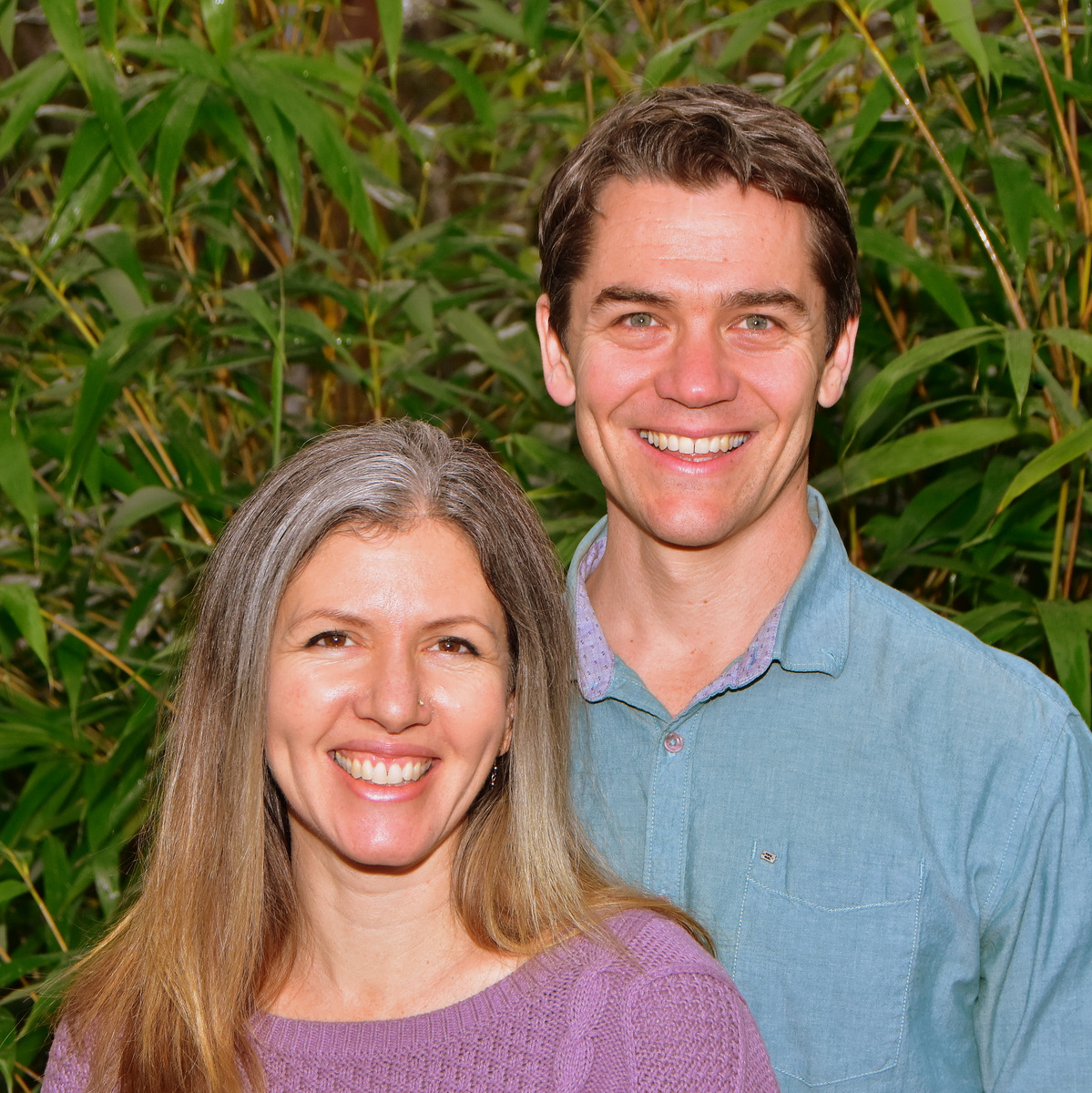
    Nayaswami Nischala and Nakula are directors for the Ananda College of Living Wisdom.

    For 18 years they lived at the Ananda Meditation Retreat, where they started the college and also ran the retreat.  Nakula is an original member of Ananda since 1970, and also was the project manager for Swami Kriyananda’s Moksha Mandir, and the Ananda Village Temple of Light.

  • Be The Change

    Be The Change

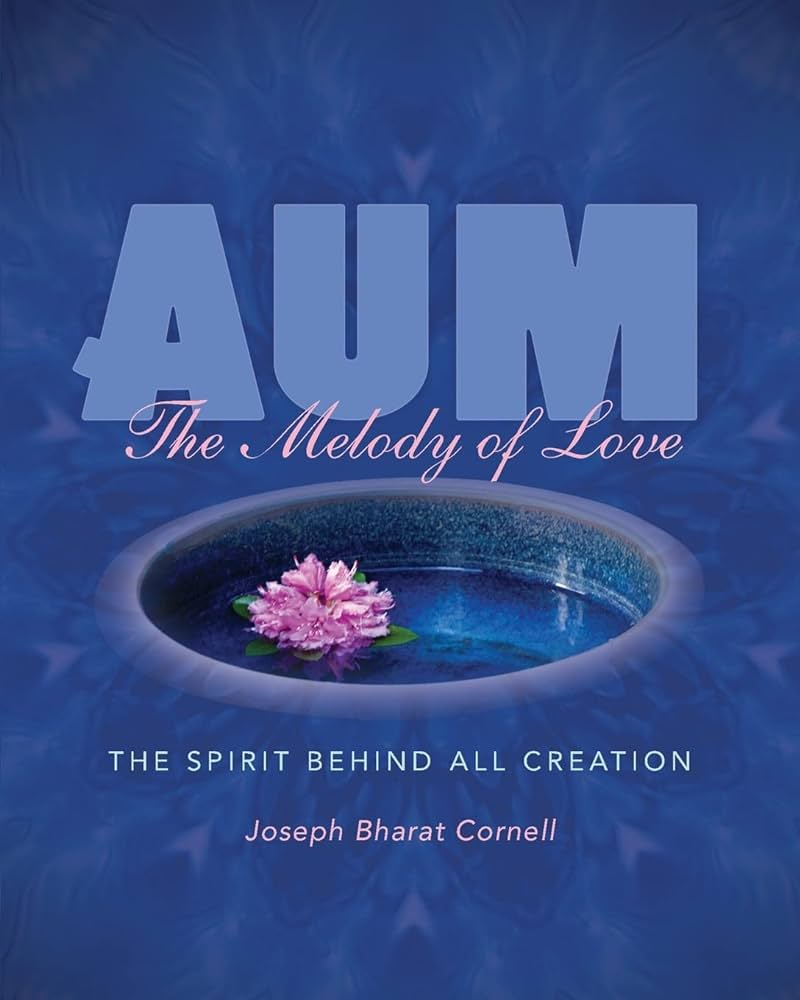
    In his book, Aum The Melody of Love, Joseph Bharat Cornell states “Aum is God’s consciousness vibrating throughout creation. It is the bridge that unites Nature and Spirit, human and cosmic consciousness. Holy Aum is the stream of God’s consciousness into which the soul merges to discover its own highest nature.”

    These thrilling words give us a very clear direction to finding happiness in our lives. Through practicing Aum, both in meditation and in our daily life, we attune ourselves to the cosmic consciousness that pervades every atom of the universe.

    Paramhansa Yogananda once said, “The path to God is not a circus. The important thing is that we change ourselves.” That change may take many lifetimes, but if we are already searching earnestly, we are almost there! Almost is relative with eternity, but still, here we are: searching, meditating, serving with fellow devotees, doing our best to make the inward changes that will not only bring us happiness, but also bring happiness to the world around us.

    Practicing the presence of God, using the mantra Aum, or inwardly chanting can be a tall order in the hubbub of modern life. We have careers to pay the bills, families to raise, social obligations to tend to. There are some simple steps that can help us stay on the right track.

    It begins with being aware of our own reactive processes. When we begin with daily meditation, we can go deep enough to feel what it is like to be relaxed in our own Self. This becomes our personal gold standard as we move throughout our day. 

    The most important thing to remember is to stay aware and acknowledge what’s happening within us. If we start to feel tense, irritable, or defensive we know “God has left the building.” The more basic part of our brain, and the body’s physiology to stress has taken over. Two primary feelings that initiate the fight or flight response are fear and anger.

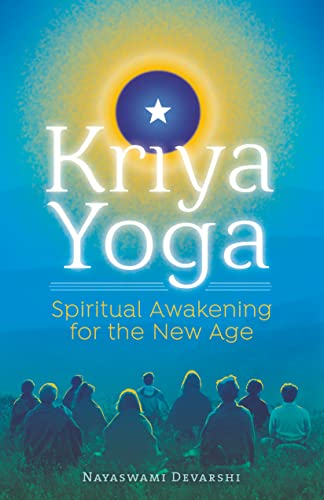
    Nayaswami Devarshi, in his book Kriya Yoga: Spiritual Awakening for the New Age, gives a great practice for transforming our reactivity by consciously using our awareness and willpower. At the first sign of tension start practicing using a mantra, like Aum. Offer up all that negative energy to God, at the point between the eyebrows.  Over time, every time you start to get tense you can practice this technique. Challenges become opportunities for deepening our relationship with God and Guru!

    I once found myself tied up under water with my surf board line. I struggled for some time but realized “this might be it.” I chanted Aum Guru and relaxed, and as soon as I did so the line relaxed around me and I floated to the surface with a gasp for air, but no harm came to me. This is a perfect metaphor for life. When we get ourselves all tied up in knots we just need to remember “who’s in charge.” Relax in God and life’s lessons will carry us ever closer to our Oneness in Spirit.

  • Be Thou a Yogi

    Be Thou a Yogi

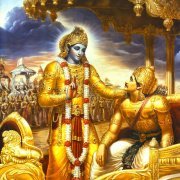
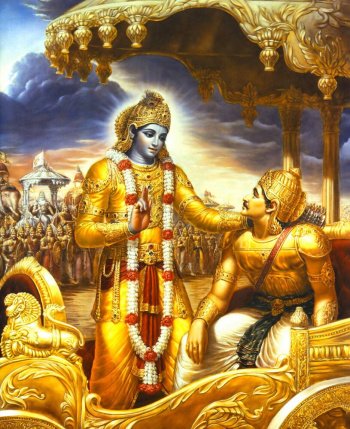
    In the Bhagavad Gita, India’s magnificent scripture, there’s a mystical verse, the meaning of which is not easily understood. Lord Krishna, speaking to his disciple Arjuna, says, “That which is night for the unenlightened is day for the yogi. And that which is day for ordinary people is night for the yogi-seer.”

    These words present us with a puzzle, and we have to look beneath their surface to solve it. Krishna is saying that what may seem real to us – we who see the world mainly with our limited senses – becomes unreal at a higher level of consciousness.

    As you and I move through our days, we rely on our conscious mind to analyze and navigate the course of what we encounter. The yogi, however, has little interest in such mental or physical gymnastics. He (or she) looks to the “inner reality” for the guidance and answers needed.

    Well, that’s interesting, but is it practical for people like you and me? Is it even possible? You and I live in a world that demands our daily attention and our outward activity if we expect to sustain ourselves. We are not so advanced that we can ignore the needs of our bodies, the need to put food on the table for ourselves and our families, the need to provide for the education and welfare of our children. We have responsibilities. Night and day for us are busy times of striving to make ends meet.

    Behind closed eyes, the yogi sees light. Does he lose his worldly bearings? On the contrary, he is able to relate effectively to every facet of his life, both inward and outward, because nothing pulls him out of his superconscious knowing what this life is about. It’s about accepting and loving all that is – everything – as coming from God.

    Krishna, in the next verse, then tells us what we have to do to rise above the ordinary and into the yogi’s realm. “Contentment is his who, like the vast ocean, absorbs into himself all rivers of desire.”

    Acting on this awareness is plainly what we find most difficult, because all of our habits, attachments and desires are certain to conspire against us, distracting us from the inward, meditative process that is the way forward. Yogas chitta vritti nirodh (from the Yoga Sutras of Patanjali), the neutralization of the vortices of our worldly likes and dislikes, remains incomplete.

    Well, that’s a bit depressing. What about all those movies we like, our favorite foods and the pleasures of getting away on vacation? Can’t we be content to be contented just part of the time? What’s wrong with that?

    Well, there’s nothing wrong with that except for what follows: some measure of letdown, or worse, when the temporary pleasure we experience comes to its finite end, as it must.

    I grant you, we’ve been highly conditioned to believe that our worldly pursuits are the best means to our happiness. But Krishna repeatedly reminds us not to be fooled by that kind of thinking. Think not to get, but to give. Think not to possess, but to enjoy and let go. It’s all a dance of the four A’s: Attitude, Attunement, Acceptance and Action.

    We are charged with learning to discriminate between what is spiritually progressive and what isn’t. “Resolutely I quell my inclinations that my mind be open to the wisdom-guidance of my soul.” That spot-on affirmation, offered by Swami Kriyananda, is ideal for calling upon our discriminative powers.

    The path to becoming a yogi is a lot about neti, neti: not this, not that. Can we still enjoy the things of this earth? Yes, of course, and we should, but with the love of God, with discrimination, with right attitude and non-attachment.

    Therein lies the key to entering the yogi’s luminous “inner reality.”  It’s the key to finding contentment in every circumstance. And it’s the key to knowing that what we outwardly see as day is a dream, a dream that cannot begin to compare with the Light that shines like a thousand suns behind the closed eyes of one whose ultimate desire is to realize God. 

  • The Trumpet Call of Friendship

    The Trumpet Call of Friendship

    The greatest joy and growth, pain and sorrows in this world all relate to our connection with others. And the highest form of connection is friendship. True friendship is a spiritual relationship of love, support and respect. Paramhansa Yogananda wrote “Friendship is God’s trumpet call, bidding the soul to destroy the walls which separate it from other souls, and from Him.”  

    My wife Gita and I will soon be sharing an inspirational workshop at our Ananda Portland Temple on this topic-–Radiant Relationships: A Yogic Approach to Love (join us in-person or online!). The focus is not intended for couples alone, which deserve special emphasis, but for all relationships which have basic and critical elements in common. Naturally we have been thinking of this topic and will share some of the following ingredients, crucial to the success of any relationship: 

    • Take care of yourself. Exercise, appearance, diet, meditation…what do these have to do with your friendships? If you are not in a healthy, balanced state it is hard to be at your best when relating to others. Meditation and spiritual practices, above all, help us relate with friends and loved ones from the highest place within us.
    • Have fun. Be willing to laugh at yourself. Don’t take life too seriously, and maintain a good sense of humor. People are weird–face it, you are weird!–and this world is full of weirdness. The best approach, especially when is to comes to oneself, is to try to have fun and keep it light, without sacrificing your depth—see above re: balance.
    • Learn to behave. Develop attitudes that will nurture your relationships such as thoughtfulness, kindness, and deep respect. Avoid acting or speaking out from an emotional state. Learn to accept and love others as they are. All our problems arise from our expectations of others, and of life. Remember, you are not the Guru of your spouse, friend or acquaintance. Be a good listener, a kind heart, and a thoughtful friend. 
    • Maintain perspective. Nothing is more important than your relationships. Don’t let “stuff” get in the way. As a great husband of many years’ once said: “When I married my wife, I told her I would make all the important decisions in our relationship. Since then there just haven’t been any important decisions to make.” Nothing is more important than our friends!

    Ananda exists to support people in the quest to realize God. The medium for this to happen is first and foremost through meditation and the loving relationship between soul and Spirit. Then it all comes down to our interactions with people—in our homes and families, work and service, play and social spheres. Take note–this is where the bulk of our karma and growth takes place!

    In fifteen years of living and serving at Ananda, far and away the greatest wealth I have acquired is true friendship: with myself, with others, and with God. Not a king’s treasury could compare in worth! There are hundreds of friends around the world who I share this deep connection with. While only a handful can be more personal, intimate friendships, the depth of true, divine friendship is timeless, transcendental and ever-sweet!  

    Prioritize these divine friendships over the less-important things in your life (hint: everything else) and nurture your soul relationships with all. The trumpet call of friendship is sounding! Will you answer the call?

  • Atomic Resolutions

    Atomic Resolutions

    Now is the time of resolutions, a time for making promises that are notoriously broken within weeks. Here in Portland, we’ve had an epic ice storm to contend with as we try to maintain ours! New Year’s resolutions are not simply a social construct. In fact, they are a natural expression of what is happening for us on an energetic level. 

    January 5th is the celebration of Paramhansa Yogananda’s birthday, a time for renewed inner commitment and fresh starts for many of us. January 14th the sun moves into the sign of Capricorn, which signifies the start to the astrological new year, according to the Vedic tradition. Capricorn starts the new year off with her commitment to hard work and her innate loyalty and ambition. As you can see, it’s a pretty good time to set new resolutions to achieve goals.

    Paramhansa Yogananda in his chapter in Autobiography of a Yogi called “Outwitting the Stars” talks with his guru Sri Yukteswar about how a great master is so attuned to the energies of both themself and the universe around them that they know how to flow with the celestial influences, rather than against them.

    So, how do we harness the time of Capricorn to actually succeed at these new year’s resolutions, rather than give them up before we’ve entered the sign of Aquarius on February 14th? For this answer, let’s consider both our personal experiences and the wisdom of the ages.

    On a personal level, new year’s resolutions are hit or miss for most of us. I remember the year I decided to quit smoking cigarettes (2000). I woke one day in January and decided that they tasted bad and that I wasn’t a smoker. I quit that day. From there, I had to disassociate every activity that I previously associated with smoking – walking, drinking coffee, driving, socializing. It was primarily an exercise of re-visioning my life now as a nonsmoker. Once I had a clear vision of my new self, the habit slowly lost its power.

    The teachings of yoga offer many valuable tools on the road to building new habits. Swami Kriyananda taught us that to make meditation a daily habit there are important things we can do such as creating an uplifting space for meditation, committing to certain times of day for our practices, finding others to meditate with, studying the lives of saints and masters, and most of all, cultivating the heart’s devotion to the Divine.

    What all of these guidelines suggest is that to succeed at building new habits, it takes more than habit tracker apps. We must cultivate commitment on four levels:

    1. The physical: what structure do we have in place to support the achievement of our new goal?  
    2. The mental: what ideas and attitudes are we cultivating to support the achievement of our goal?
    3. The emotional: is our heart in it? Can we light the fire of our desire towards whatever we set out to achieve and then maintain that fire ever-burning?
    4. The spiritual: how is this goal in alignment with our highest Self? What is the driving energy behind it? How is this helping in our soul’s evolution?

    In the popular book Atomic Habits: Tiny Changes, Remarkable Results, James Clear has a number of excellent suggestions about how to make new habits stick. At the heart of his thesis is this universal truth: who you believe yourself to be drives the daily actions that accumulate as habits to create your life. 

    So, if your resolution is about deepening your spiritual life, it is wise to consider what you believe about yourself as a spiritual being and what you think one ought to look like. One common pitfall on the path to creating habits of spiritual practice is the belief that to be successful, one must look a certain way, act a certain way, and feel only certain feelings. 

    Surrender, When You're Trying Too Hard - Ananda India

    The great saints are excellent teachers on this subject for they come in every imaginable shape and size and personality. As we study their lives and our own, we come to see the Divine dancing through a myriad of forms. Behind each one, we recognize the consciousness that animates the dancer. And thus we begin to redefine what it means to be spiritual and set ourselves up for truly successful resolutions

  • Entitlement

    Entitlement

    by Nayaswami Hanuman

    In Swami Kriyananda’s book Paramhansa Yogananda, A Biography, in the chapter “The Beauty of Devotion” Swami writes “The oppositions of Nature are ineluctable. Everything must be cancelled out eventually,”

     The only thing to which there is no opposite is inner Bliss. And because divine love is the outward expression of Bliss, there is no opposite to selfless, self-giving love.

    Most of you may not know or remember Steven Covey. He was an author, speaker, and businessman who wrote “The Seven Habits of Highly Effective People.” One of the cartoons he had in his book was that of a ladder leaning against a tall building with the caption something like, “and what happens if you are climbing the ladder up the wrong building?”

    I feel like much of my life was spent doing just that. Climbing the ladder of material success only to find out I was climbing up the wrong ladder. I grew up in the 50s and 60s, and frankly, I had no idea what I was going to do with my life. I joined the army even before graduating from high school, ensuring that I would graduate (which was questionable at the time). It wasn’t until the 70’s that I realized if I wanted to “make something of myself” I’d better go back to school. 

    I studied hard and was grateful for a G.I bill that paid for my education. I graduated from college with my degree in nursing and spent much of my life in that field. I worked hard and I got paid well for my work. Did I feel entitled? Well yes! 

    It wasn’t until I realized that a good job, family, house, and even friends wasn’t enough. There was a part of me that wanted to achieve more, be more, experience more. I thought I would find it as a Doctor of Chiropractic. But I was wrong. The best thing that came out of getting my chiropractic degree was meeting Mari, who saw enough in me to accept my hand in marriage. 

    It was 1981. We had just found Ananda, and made a deep commitment to one another that our relationship would put God first and foremost in our lives. 40 years later we are still living that commitment. 

    Nayaswamis Hanuman and Mari

    I no longer believe that I am entitled to anything, other than the love of God which is unconditional. Mari recently said to me, about our work with Ananda over the past 40 years, “as soon as we think we are entitled to anything other than what God has given us, we are in the wrong business.” We are in the business of selfless service to God and guru. Are we always successful at it? No, but is there any other place we would rather be? No! Happiness is an inside job. The deeper we understand that and live that, the happier we will be, and the happier those around us will be.

  • Enthusiasm Be Thy Engine

    Enthusiasm Be Thy Engine

    To live an uplifting life, enthusiasm is a quintessential quality to have, and when we’re on a roll, it is easy to come by. We can hardly wait to be with that special person or to hear that whatever we want to happen is happening. But what about those other times when the future doesn’t look so rosy? Where’s our enthusiasm then?

    In times of trial, we can do no better than look to the life of Jesus, in particular to that fateful Thursday night in the Garden of Gethsemane, knowing what was about to ensue. When the soldiers came to arrest him, he stood firmly in his spine and went to what he knew was going to occur.

    Christ in Gethsemane,1886 by Heinrich Hofmann

    This was his way of saying to all of us, when faced with an unavoidable situation, “Bring it on, because I know how the story ends, and this is just what I have to do to get to that glorious day.”

    Why does our enthusiasm disappear at the first sign of a difficult challenge? Why do we tend to see only the crown of thorns and the cross ahead? Where is our faith in that glorious day to come?

    I’m not making light of the tests that we are bound to face. I have tried to run from my share of them too, or groused about how unfair they appear to be before leaning into doing whatever needed to be done. But why do we so easily forget what this life is all about and what we have to do to reach the ultimate freedom and ever new bliss that is our promised destiny?

    Jesus admonished us to feel that we have God already, because we do if we simply allow the awareness of it to infuse us. Yet, as tests arise, still we resist that superconscious mindset that would redeem our enthusiasm and get us to the goal so much sooner.

    Jesus set the bar for us as high as anyone could. It was with the aim of inspiring us by his example. He accepted both his duty and his destiny with unwavering faith in God, and with love and forgiveness even for those who carried out his cruel death. 

    Spiritual eye painting by Swami Kriyananda

    Yogis know that enthusiasm, especially in the form of courage, is a daily practice. It’s about accepting what lies before us – whatever that cross might be – and seeing it as coming from God as a spiritual opportunity.

    Jesus did not shrink from what he had to do. We talk of him making the ultimate sacrifice. We, too, even if not tragically, will be gone from here soon enough. But is that our story’s end?  Or, when bravely accepted, will it be a whole new beginning – a resurrection of consciousness – that brings us to a higher level of attunement?

    The world out there is in a constant race to put out the fires of misery that it continues to enflame. We have to live in that world, but we don’t have to let it burn us. We have the means of our resurrection right here: faith in the destiny that Jesus has shown us, and the will to be about it.

    We are homeward bound, all the sooner to arrive when enthusiasm is the engine we use to drives us.

  • Rise in Freedom – Welcome!

    Rise in Freedom – Welcome!

    Dear friends, old and new, near and far, welcome to our new weekly blog from Ananda Portland, entitled Rise in Freedom, to bring joy and inspiration from the path of Self-realization and Kriya Yoga. Our regular and guest authors will cover a wide range of topics from the practical and personal to the esoteric and extraordinary–always with the intention to uplift our consciousness.

    Yoga and spirituality is a pathway to freedom. Yoga postures are wonderful but won’t make you free; the path of Raja Yoga however is all-encompassing , and through meditation and lifestyle can make us free from fear, sorrow and doubt. Then, like a hot-air balloon cut free from its ballast, our hearts and minds will rise in the freedom of clear skies.

    In this blog, the spiritual path as outlined by Paramhansa Yogananda and Swami Kriyananda will be our firm and steady guide. But  far from a dogmatic approach, we will use this as the basis for a creative exploration of everyday life, and the crazy, contemporary world we find ourselves in. A constantly fresh and thoughtful approach is needed to bring an appropriate spiritual perspective to the world today. Then the spiritual life is helpful and applicable to everyone and everything. It gives us a balanced and useful frame of reference for the grave and the mundane, as well as the wild and the wooly.

    We have crossed the threshold of another calendar year, a notch in the world belt of progress: the good, as well as the bad and ugly. The world around us is full of problems and solutions, sorrows and joys, and a myriad of experiences and possibilities. It’s enough to set our heads spinning. So let us pick it all up by the one thread that has all the answers–the spiritual life. Meditation, a spiritual lifestyle, and above all God. The word “God” in the english language and western world falls woefully short, but let us nonetheless make the mystical, the spiritual, the divine, cosmic consciousness–God–the central pillar of our understanding and inspiration to make sense of life, to find fulfillment, inspiration and joy through all experiences.

    Let’s rise in freedom together by exploring ourselves and the world: what makes us tick, how this magical universe works, and how to be the best version of ourselves we can be. Twenty-six years ago the comic strip Calvin and Hobbes by Bill Watterson published its final piece, which I share with you here. Although in one sense there may be nothing new under the sun (or snow), this moment is a fresh, clean start, full of possibilities in a magical world. Let’s go exploring together!

  • SRW Pilgrimage 2024

    SRW Pilgrimage 2024

    Dear Friends…

    We are moving ahead with our plans for going together as a group to Spiritual Renewal Week next year: June 23-30. If you would like to consider joining us, here is the basic information to know at this time.

    We have reserved a block of six rooms, double occupancy, at the Expanding Light’s Serenity House. Also available at this time are four cabins and several rooms in Harmony House, all of which are adjacent to the Temple of Light, dining room and boutique.

    Cost for the week – inclusive of accommodations, 3 meals per day, and all programs during the week – is $1,218 if staying at Serenity House or in one the cabins, a little more for Harmony House.

    Because of wanting to accommodate as many people as possible during the week, only double-occupancy rooms are available, no private rooms. However, you may also request to stay with Ananda Village residents you may know, but call them soon, as folks from other colonies may be contacting them also. Another option is tenting in assigned Village areas.

    Tent camping or staying with Village residents does not carry a fee, in which case you would pay for the SRW package of programs and meals.

    The other expense will be transportation. We will rent van(s) for the drive, leaving about 5 am on Sunday, June 23, and returning on Sunday, June 30. The cost per person will be an estimated $200 round trip. The cost of flying to Sacramento and renting a car would obviously run more, and you wouldn’t have the satsang of riding together.

    So, to round off the overall cost, $1,500 seems about right, leaving a little extra for snacks for the drive and boutique purchases at the Village.

    For us to reserve the van(s), each person will need to give a deposit of $100 to Ananda Portland by December 20. You can give the deposit to Melissa at the Temple or just leave it in an envelope at the front desk with a note: “For the ride to SRW.”

    Reservations for the entire SRW package at Ananda Village will need to be booked individually, and I highly recommend that you do this as soon as possible. After the 1st of the year, rooms will be harder to book because of high demand, and availabilities may be limited or closed.

    To call The Expanding Light for your booking – be sure to mention the Ananda Portland reservation at Serenity House if that is where you would like to stay – the phone number is 530-478-7518.

    This is going to be a wonderful time, and we look forward to sharing it with you and your worldwide Ananda family.

    We would love to include as many folks as we can, so pass the word along to others you think might like to join us, but everyone will need to act soon.

    Joy…

    Surendra


    * * * * *